As I was approaching home after my morning stroll I met an angry young man (probably about 18) in a hurry, heading towards me in an old Hyundai with a cranking and much younger audio system. He was very annoyed at having to indicate and move out to go around me and stopped to yell at me to, “Walk on the f***ing footpath, arsehole”. I replied, “Thank you for taking the time to stop and remind me.” I think he missed the irony as he hurtled off.
When did life get so tough that using an indicator and turning a steering wheel could be so traumatic?
iReview:
Last Thursday, 25 April, was Anzac Day, the day Australians and New Zealanders acknowledge the sacrifice of all those who have served in war and peacekeeping. It also commemorates the men and women who have died in that service.
Anzac Day coincides with the landing of ANZAC (Australian and New Zealand Army Corps), French, British and other British Empire troops at Gallipoli in south west Turkey in 1915. The objective was to secure the Dardanelles to provide a sea route to reach the Russian allies and ultimately to take Constantinople (Istanbul) and knock Germany’s ally, Turkey, out of the war.
The eight month campaign that followed cost the lives of 53,000 allied (including almost 12,000 Anzacs) and 56,000 Turks with total casualties reaching almost half a million. Many thousands more, suffered from dysentary, a result of the appalling sanitary conditions encountered by the troops.
Despite the campaign’s ultimate failure, media reports reaching Australia extolled the heroism of the Anzac troops and stirred national pride in the young country which had federated as Australia only 14 years earlier. Albany, the south coast port city in my home state of Western Australia, was the embarkation point for the thousands of troops who left Australia for Gallipoli. Albany also has a special significance for my family as it was my children’s maternal grandmother who, 15 years ago, uncovered the evidence that confirmed Albany as the location for the nation’s first iconic Anzac Day “Dawn Service”.
The way Australians relate to Anzac Day has evolved over the years and has not always been as robustly and reverentially marked as it is today. I remember Anzac Day in the 1970s, as a holiday celebrated largely as a day off from work and school, with a sideshow parade of old soldiers who got together once a year to swap tales of war, gamble a little and imbibe a little too much. The Gallipoli Campaign that sporned the day of remembrance as well as the world wars that were commemorated, were remote, little known and of scant significance to many. At that time, many Australians were also disaffected with all things military as a result of the country’s involvement in the disastrous Vietnam War.
To acknowledge the significance of the day, I thought I’d revisit this best loved of Australia’s War cinema: Gallipoli.
What Happens:
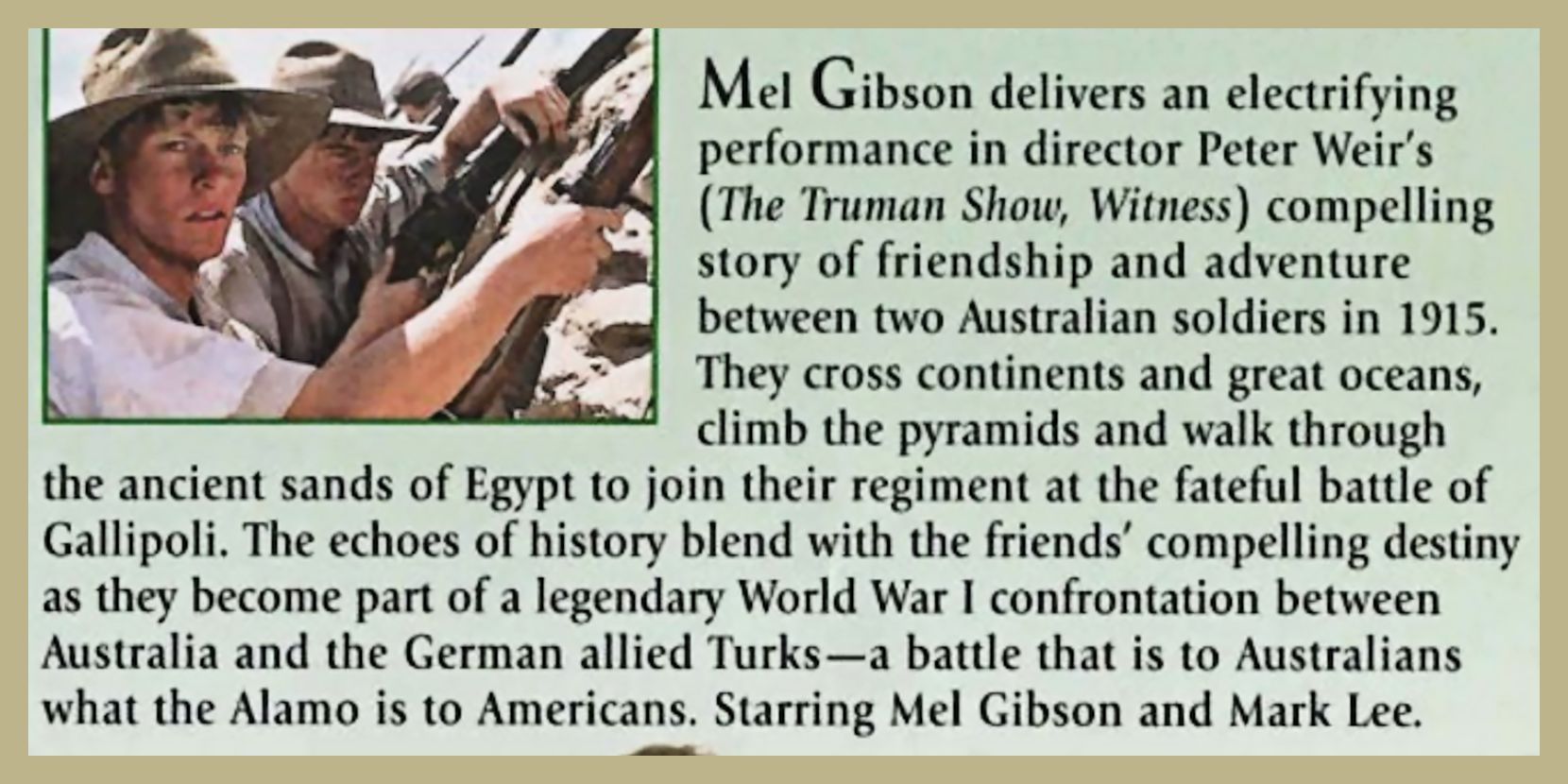
Eighteen year-old Western Australian champion sprinter Archy Hamilton (Mark Lee) could be an Olympic contender, but he disappoints his trainer Jack (Bill Kerr) when he instead enlists in the elite Australian Light Horse cavalry. He’s accompanied by talented sprinter Frank Dunne (Mel Gibson), who also attempts to join but can’t ride a horse and is relegated to the infantry with his other friends.
Training in Cairo, the Anzac cavalrymen are converted to infantry so Archy persuades his Major, Barton (Bill Hunter) to allow Frank to transfer to the regiment.
At Gallipoli in 1915, the Anzacs find that they’re being used as cannon fodder as a ‘diversion’ for British landings elsewhere, and the entire unit realizes that they must obey suicidal orders and charge Turkish machine guns, a lunatic event among a litany of incompetent military planning.
Story (Click to expand)
Since I last saw this movie many years ago, I’d forgotten that it starts out as a boy’s own adventure featuring a very young, very Australian and not so weird Mel Gibson. With the benefit of hindsight, it’s interesting to reflect on this nascent star and his subsequent and controversial career. It’s also interesting to reflect on the very different career trajectories of the two stars. Gibson, we know went on a stellar rise to the A-list in Hollywood while Mark Lee (Archy Hamilton) moved into relative obscurity.
The outback scenes that open the film are spectacularly shot with the heat, dust and desolation radiating off the screen. The stark monochromatic beauty of Australia’s hot, dry interior is a place best admired from the air-conditioned comfort of a 4 wheel drive. That many Australians willingly endured life in these and other hostile environs was the steel that forged the myth of the tough Anzac warrior. Williamson’s script is cloaked in this mythology and he uses it well to set up the main protagonists in this yarn.
Archy is a naive young man and a very talented runner who yearns for the adventure of Gallipoli that he has read and heard about. His sprinting rival, Frank (Mel Gibson) is a cynical descendant of Irish nationalists, and as such, has no desire to fight Britain’s war. At the time, Irish nationalists and unionists were in a bitter struggle over the future independence of Ireland from Britain. The speed with which Frank and Archy are transformed from rivals to such good friends that Frank is prepared to enlist with him, almost stretches my credulity and that’s despite the device of the desert trek bonding ordeal they endure that cements their close mateship. If Weir had taken more time to develop these characters, perhaps this wouldn’t have seemed such a stretch.
Generally, the performances of the cast, particularly, Mel Gibson are strong. Newcomer, Mark Lee also convinced, despite apparently having a particularly nervous time on set.
David Williamson’s script also moves the story well and although calculated to draw strong emotion, it doesn’t overindulge in overt tearjerking.
Although half the movie is set in Western Australia, none of it was filmed there. Lake Torrens in South Australia represented the desert in WA and Adelaide Railway Station stood in for Perth. The Marble Hall at the station also provided the set for the Cairo ball, before the troops shipped out to Gallipoli. Various beaches in South Australia, including Gallipoli Beach, were also used to depict the Gallipoli theater. On the other hand, the Cairo pyramid footage was actually shot on location and provides an interesting, and sometimes amusing, leg of the boy’s own adventure. The behaviour of the Aussies in Egypt as they mocked their British counterparts, also provided a neat metaphor for the rebellious teenager relationship, Australia shared with the mother country.
One of the film’s most memorable scenes was the eerily quiet and beautiful night arrival at Gallipoli; the looming terror juxtaposed with the brightly festooned and other worldly hospital ship offshore. And although for a time it looked like the boys were approaching a fun day at the seaside, the blood in the water, as they abandoned their cares and clothes and went swimming, reminded us of the deadly import of their endeavour.
The final scenes in the trenches were laden with the dread of what was coming, interspersed with the evocative strains of Giazotto’s Adagio in G minor. Major Barton’s attempt to shut out the war raging around him, listening to the duet from Bizet’s famed The Pearl Fishers opera, also provided a poignant moment in the buildup to the horrible climax.
On the morning of 7 August 1915, the Australian 8th and 10th Light Horse Regiments were to attack Turkish lines a mere 30 metres from their own. The attack in 4 waves, was to be immediately preceded by an artillery suppression barrage that fatefully ended 7 minutes early as a result of unsynchronised watches. The troops had already been instructed to remove ammunition from their rifles and fix bayonets. So hopeless was their position after the Turks were alerted by the barrage, that many went over the top without even their rifle. I’ll never forget the image of a bayonet being thrust into the wall of the trench to act as a hanger for a doomed soldier’s precious wedding ring. Knowing the terror that those boys must have felt as wave after wave went over the top to a certain death, enraged me today even as it did 32 years ago.
The futile attempts to get the 4 insanely suicidal charges of this Battle of the Nek called off, provided the closing argument in Weir’s prosecution case that: the Gallipoli Campaign was a cruel waste of talented young lives sacrificed by stupid and incompetent leaders. On a larger scale, it also symbolised the generation lost to the insanity that was World War I.
The final freeze-frame which evokes Robert Capa’s famous 1936 Spanish Civil War photograph The Falling Soldier, had me uncomfortably riveted to my seat with tears streaming, the first time round. Seeing it again, all these years later had exactly the same impact.
The Picture:
This is a film crying out for a Blu-ray release. The grainy, artifact laden sky in the early outback scenes, reminded me how disappointing the old DVD format picture can be. Russell Boyd’s wonderful cinematography, particularly in the early scenes, needs to be showcased in high definition.
The Audio:
I would have liked a DTS 5.1 audio track but the Dolby Digital 5.1 track was reasonably serviceable. However, the mix was heavily biased towards a simple front stereo with little distribution to surround or subwoofer channels. Frankly there was little difference between the quality of the output from my receiver and the sound generated by the surround speakers on the Panasonic 140cm flat screen monitor.
Verdict:
When I first saw this movie in 1981 it was very much a creature of its time, coming so soon after Breaker Morant and the widening scrutiny of Australia’s past as well as its relationship with Britain and the British Empire. So, with its huge success, this was also a triumph of its time. I’m pleased to say, it is still a wonderful and deeply affecting landmark in Australian Cinema.
iRate:: 4½ out of 5.
4Movie Tragics
Extras:
Disk One:
• Cast and Crew Bios and Filmography (interactive bio. & filmography text screens).
• Theatrical Trailer.
Disk Two:
• Interview with Peter Weir (interesting retrospective interview) – 15min.
• Interview with Mel Gibson (reflective interview filmed in 2005) – 12min.
• Boys Of The Dardanelles: Australian War Memorial Documentary (produced by the War Memorial to commemorate the men who fought and died at Gallipoli) – 22min.
• The Keith Murdoch Letter: The Letter That Changed History (a facsimile of the letter Murdoch wrote to his friend, Australian prime minister Andrew Fisher, which led to the removal of the Campaign commander, General Sir Ian Hamilton and the eventual withdrawal from Gallipoli. Note: Sir Keith was the father of Gallipoli producer and media mogul, Rupert Murdoch).
• Photo Gallery (30 production stills) – 2min.
• In Depth Gallipoli Material (library of interesting information stills).
• DVD-Rom Teaching Aids including a printable version of The Keith Murdoch Letter: The Letter That Changed History.
Trinity Episcopal Church
Cnr. Wall Street and Broadway, Lower Manhattan, New York.
If anyone ever wondered just how rich churches are in this age of rising disbelief… Check this out. The financial books at New York’s Trinity Church have been revealed in court documents arising from a bitter parish legal dispute over, you guessed it, money. This Episcopal church (a member of the US Episcopal branch of the Anglican Church or Church of England as you might know it) holds property valued at a whopping $2 billion within its parish, including some of the most prized real estate in Manhattan, near SoHo and Greenwich Village.
Michael Nagle for The New York Times Most of Trinity Church’s Manhattan real estate holdings are in the Hudson Square area, including a vacant lot at Duarte Square.
Also revealed, was the compensation package paid to the Trinity Church rector, the Rev. James H. Cooper who gets an annual salary of $US475,000 which rises to $US1.3 million when pension contributions and the imputed value of his opulent $5.5 million, church owned town house, are included.
So next time you look up at the pious face of your priest, ask yourself if his/her calling was inspired by the man in the simple cloth who owned nothing, Jesus, or was it just a canny career choice.
iReview:
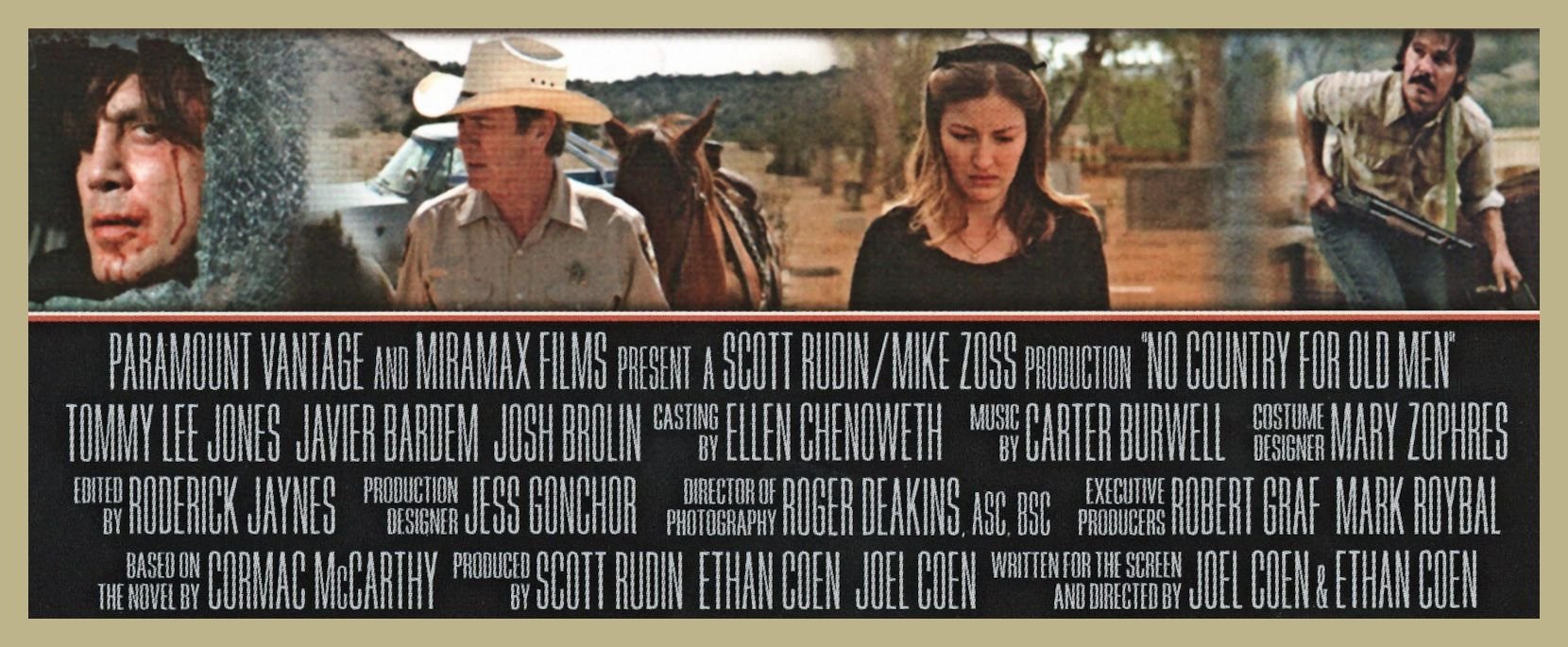
This week I decided to check out a movie I hadn’t seen before (unbelievably lame, I know), and also from this century: No Country For Old Men (2007). Universally praised and hailed as a filmmakers masterpiece, this movie also attracted an avalanche of awards. Joel and Ethan Coen share the record of four Oscar nominations for the same film with Orson Welles for Citizen Kane (1941) and Warren Beatty for Reds (1981). The Coens’ four nominations are for Best Picture (won as producers with Scott Rudin), Best Director (won), Best Adapted Screenplay (won), and Best Editing (under the pseudonym Roderick Jaynes).
What Happens:
Acclaimed filmmakers Joel and Ethan Coen deliver their most gripping and ambitious film yet in this sizzling and supercharged crime thriller.
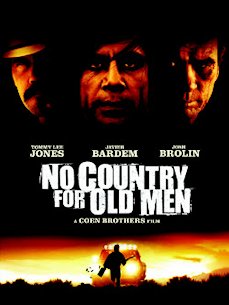
When Llewelyn Moss (Josh Brolin) stumbles on a bloody crime scene, a pickup truck loaded with heroin, and two million dollars in irresistible cash, his decision to take the money sets off an unstoppable chain reaction of violence and his pursuit by a nerveless psychopath, Anton Chigurh (Javier Bardem). Not even West Texas lawman, Sheriff Bell (Tommy Lee Jones), can contain it.
“This magnificent film represents the best work the Coen Brothers have done since Fargo. Like that movie classic, this is a cold-blooded thriller with a darkly humorous edge… Hitchcock wouldn’t have done the suspense better.”
(David Stratton, ABC Australia, At The Movies)
“No Country for Old Men is as good a film as the Coen brothers, Joel and Ethan, have ever made, and they made Fargo.”
(Roger Ebert, Chicago Sun-Times)
Story (Click to expand)
While this is recognized as the Coen brothers darkest and most tense film, it is not lacking in their signature deadpan humour. I love the way they play with Cormac McCarthy’s language in this script (yes they directed, adapted and edited the whole thing). Here’s an exchange between Deputy Wendell (Garret Dillahunt) and Sheriff Bell (Tommy Lee Jones):
Wendell
“Well, it’s a mess, ain’t it, sheriff?”
Sheriff Bell
“If it ain’t, it’ll do till the mess gets here.”
McCarthy’s writing was clearly destined for the Coens’ delightful and mischievous adaptation. I can imagine the brothers glee as they saw these words; they and Cormac are kindred spirits.
The three main characters are all beautifully drawn: Vietnam vet. Llewelyn Moss (Josh Brolin), is an expert hunter who happens upon an unhappy scene with perhaps, happy consequence – a slew of bullet-strewn bodies, bullet-ridden trucks, a truckload of drugs and 2 million dollars in cash; Sheriff Ed Tom Bell (Jones), a very competent veteran lawman, the last in this family business, who seems slightly out of his time; and recovery guy, Anton Chigurh (Javier Bardem), the unflinching psychopath who carves a murderous path across Texas with his gas bottle and cattle stun-gun.
Brolin is entirely believable as Moss, a man who might just be able to stay one step ahead of the unstoppable Chigurh (pronounced chugar). Tommy Lee Jones, as the slightly world weary Bell, acts his socks off in this. He utterly inhabits the role with exquisite timing and tone, and an understated delivery that tells you he’s at the top of his craft. He also wears the vernacular like a Texas native (oh, hang on a moment, he is). Bardem was born to play Chigurh and he does so with pitch perfect characterization. You just know that if you bumped into Javier on an L.A. street, you’d regret the experience; he’s that good. The three story-anchors are ably supported by Scottish actor, Kelly MacDonald, as Moss’ wife Carla, who had me completely fooled – of course she was a Texan; Woody Harrelson plays himself delivering us Carson Wells, who was sent to end the out of control murder spree and recover the money; and Beth Grant, who gives us a short but memorable turn as Carla’s abrasive mother.
From the stunning red sky silhouette that stamps Roger Deakins’ entry into the film, you know there’s some wonderful photography ahead and he doesn’t disappoint. In much the same way as cinematographer, Tom Stern has become the right hand of director, Clint Eastwood, Deakins has come to exemplify the Coen brothers films. His framing is very precise and in almost all ways, I couldn’t imagine it done better. You only need to watch the featurette: The Making of No Country for Old Men (see extras), to see the contrast between the behind-the-scenes footage, and the finished shots.
The music from Carter Burwell, another staple of the Coen universe, is unobtrusive but appropriate, leaving space for the sound of the wind to weave its magic throughout the film.
I’ve left the best for last… The work of the brothers as directors, writers and editors is near faultless. None of the plot seems forced or contrived, even though the effect of the whole is completely quirky (as you’d expect from a Coen film). The stories of the three central intertwining characters rarely fully intersect yet they are told in such a way that you’re never left wondering. The dialogue is fluid and deliberate without anything superfluous or corny. The tension built by the direction and editing is perfectly fit for purpose with so many near misses and moments of possible discovery which keep us on the edge of the seat. The hotel/motel scenes where Moss and Chigurh never meet, are exercises in pure dread. Add to that, the device of the coin toss which creates another layer of delicious tension. And, like a cat toying with its prey, the Coen brothers leave us guessing which way the coin fell, the final time, until we see Chigurh check the soles of his boots on the path out front.
The luxury of having almost complete control of the film making process is a creative advantage few directors are afforded. Even fewer filmmakers, I suspect, would be able to handle these multiple disciplines with as much finesse as the Coens. Steven Soderbergh has often photographed (as Peter Andrews) and edited (as Mary Ann Bernard) the films he’s directed, with excellent results. However, I wouldn’t rate him quite in the same class as Joel and Ethan Coen. Here, the Coens have employed their extra limb (Deakins) on camera while they have control of every other major aspect of the look of the film. The combination of their shooting script, their dialogue, their direction and their precision editing, is a rhythm that is almost musical. I became conscious of this as I mused over their many cuts and cutaways and realized they were part of a dance which also included the delivery of the dialogue. It’s very clever and something only really achievable if you control the whole shebang as they did.
This would have been an impressive genre movie even if it had a conventional conclusion. But the ending that presents itself here, was so satisfying and original that I found myself laughing completely inappropriately. If you’re one of the other three people who haven’t yet seen this movie then I’m not going to spoil it by telling you.
The Academy got it completely right in awarding the filmmakers their Oscars for this movie; as a lesson in film making it is peerless.
As a critic, Roger Ebert, regularly placed himself in the seat of a genre fan, so he would not necessarily grade on an absolute scale (according to his taste) but rather gave a relative score. Thus on Ebert’s scale, if Superman (1978) scores 4 within the superhero genre, then Hellboy (2004) gets a pretty good 3 (even though Ebert really disliked the film) and The Punisher (2004) only a 2. If I were putting myself in someone else’s seat then, like Ebert (who scored this a 4/4), I’d have to give this 5/5. But, because I want to keep a perfect 5/5 for rare movies that completely blow me away, I am awarding this a 4½ / 5. Jeez, after an explanation like that, it might have been easier just to go the 5.
The Picture:
As you would hope, with a movie of this recent vintage, the screen image is superb. Every craggy wrinkle line, every speck of blood (and there’s a lot of that) and every bullet hole crack in the glass of Moss’ truck, is displayed in brilliant detail. The colours are rich and true and the image, clean with no visible noise.
The Audio:
I wish I’d had the foresight to have bought the Collector’s Edition with its possibly superior DTS 5.1 audio track. As it happens, this Blu-ray LPCM 5.1 sound track is more than adequate. As well, as this isn’t an action flick, the quality of audio reproduction isn’t quite as critical. There were times when the balance between speakers fell short of ideal. For example, occasionally, the right front and left surround channels dominated, leaving the left front unbalanced and slightly out of the mix. Apart from these occasional anomalies, though, the audio field sounded fine.
Verdict:
I’m embarrassed that it has taken me this long to see this movie, especially as I’ve had it in the library for some time. In a way though, I’m glad I waited because I think I can now appreciate the virtuosity of its construction a lot more than I would have only a few years ago. It’s a filmmakers tour de force and a film I’ll likely learn more from with each viewing.
iRate:: 4½ out of 5.
4Movie Tragics
Extras:
• The Making of No Country for Old Men (as well as the usual filmmaker discussion about inspiration and script development, there’s some interesting behind-the-scenes action from the set… an interesting featurette) – 24min.
• Working with the Coens (this is pretty much a PR gushfest) – 8min;
• Diary of a Country Sheriff (this character featurette looks at Sheriff Bell from a number of angles and compares him with Chigurh… enjoyable without being essential) – 7min;
Is this the best movie by the Coen brothers or does Fargo still top the list?
Have I got it completely wrong and has Stephen Hunter got it right in his Washington Post review, when he abruptly states, “I just don’t like it very much”?
Bullying is repeated and sustained verbal, physical, social or psychological behaviour by an individual or group, aimed at another individual with the intention of belittling, intimidating or controlling that individual. Bullying is also an insidious and traumatizing process for the victim. In a school, it invariably involves a stronger or older student targeting another younger, weaker or vulnerable student with sustained verbal or physical abuse over an extended period. In the workplace, bullying invariably involves the exploitation of a power imbalance and is often perpetrated by an insecure manager with low self-esteem who targets a vulnerable subordinate.
I’ve watched the devastating effects of bullying and it can have lifelong impacts…
Bullying… is not, an incident!
It annoys me when such a wholly despicable thing as bullying is lumped together with good old bad behavior and reported as: Australian swimmer Matt Targett “reprimanded” over a bullying incident which involved 5 times Olympic medalist Alicia Coutts (pictured). She was allegedly subjected to an incident of aggressive physical and verbal behaviour from Targett which occurred at the Perth tri-series meet in January.
Not nice for Alicia but if it’s one incident then it doesn’t rise to the level of bullying.
Stretching the meaning of the word, bullying to include any nasty interaction between individuals, dilutes and diminishes the value of the word in describing what it actually represents. This type of hyperbolic misuse of the word also serves to downplay the devastating impact that actual bullying can have on an individual.
Words matter.
Have you experienced bullying?
Are there other words that suffer from this type of hyperbolic misuse?
iReview:
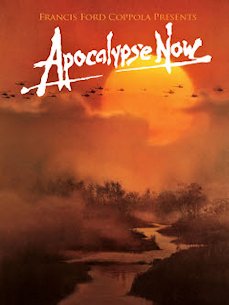
With the death of famed Chicago Sun-Times critic, Roger Ebert (see my earlier Ebert post), I thought I’d have a look at one of his and my top 10 movies, Apocalypse Now. I recently obtained the 3 disc Full Disclosure Blu-ray Edition which includes the movie tragics must-have Hearts of Darkness: A Filmmaker’s Apocalypse, the 1991 documentary chronicling the making of the film. The package also includes the 1979 cut of Apocalypse Now and an ammo dump full of interesting extras. I wasn’t able to source this set in-store so I was forced to find it online (I’ve included convenient links to search on eBay and Amazon (UK) below).
What Happens: Francis Ford Coppola adapted the Joseph Conrad novella Heart of Darkness (set in the Belgian Congo, Africa) to depict the Vietnam War as a descent into primal madness. Capt. Benjamin Willard (Martin Sheen), already on the edge, is assigned a secret mission to find and deal with AWOL Col. Kurtz (Marlon Brando), who has set himself up in the Cambodian jungle as a cult warlord. Along the way up-river, Willard encounters: the lover of napalm and Wagner, Col. Kilgore (Robert Duvall); soldiers who prefer to surf and do drugs: a troupe of USO Playboy Bunnies, whose show turns into a riot; and a manic photographer (Dennis Hopper), who tells wild, reverential stories about Kurtz. By the time Willard sees the scattering of heads at Kurtz’s compound, he knows Kurtz has gone insane…
Story (Click to expand)
It’s been many years since I saw the 2001 Redux version of this film and a year or so since my last visit with the original 1979 cut, so I arrived for this marathon sitting of Redux with relatively fresh eyes.
Now that I know Martin Sheen (Capt. Benjamin Willard) was actually very drunk when filming the first bedroom scene in which he did his best to destroy the set, the scene has acquired added significance. The blood was also real as Sheen cut his hand in the process. This scene becomes emblematic of the production chaos of the Philippines’ shoot, with a typhoon destroying the set and Sheen’s near fatal heart attack (which was kept secret, with his hospitalization ascribed to ‘heat exhaustion’). The intrigue surrounding the production is one of the things that makes the warts-and-all Hearts of Darkness: A Filmmaker’s Apocalypse documentary (on disc 3), compiled from footage shot by Eleanor Coppola, so compelling. There’s the revelation that half the cast were using marijuana, speed or LSD or all three, and often while filming. Add to that, the news that Laurence Fishburne (Clean) lied about his age to get the part as he was only 14 when filming began; that a nearby Islamic insurgency resulted in the frequent and sudden departure, often while filming, of the leased Philippines military helicopters, called away to battle; that the scheduled 6 week shoot was repeatedly extended to an eventual 16 months; that shooting delays resulted in Brando pocketing his already paid $1 million advance on his $1 million per week salary and almost walking away, rather than reschedule his three weeks on set; that Brando arrived dramatically overweight and concerned about his appearance and required that only scenes showing him in shadow be included in the film; that Brando arrived completely unprepared having read neither the novel (Heart of Darkness) or the script (something he was notorious for); that Brando insisted on detailed consultation with Coppola, sometimes lasting days, before improvising scenes, all while the cast and crew were waiting on standby; and that the budget blew out to $40 million, a record at the time. There’s also the shocking and highly confronting footage of the ritual, brutal killing of pigs and the hacking to death of the water buffalo that appears at film’s end (I think its eyes will haunt me for a very long time). The documentary also brilliantly illuminates the insanity of the shoot which seemed to mirror the insanity of the Vietnam War and the madness on screen. If you don’t want your viewing of the film to be tainted, I’d recommend you leave this documentary ’til last.
Apocalypse Now was always episodic, as road movies often are, with set pieces revealed as Willard and the river patrol boat crew, progress up the Nung River towards Cambodia. But in Redux, this aspect of the story is accentuated with the addition of scenes featuring the stranded ‘Bunnies’ and the French colonial plantation compound.
After so many previous viewings, there’s still the pleasure of anticipation, waiting for the arrival of Colonel Bill Kilgore (Robert Duvall) who leads his airborne chopper cavalry and is surfing obsessed, seemingly invulnerable, and just loves “the smell of napalm in the morning”. He also has a lust for mass carnage, accompanied by a bellowing rendition of “Ride of the Valkyries” by Wagner.
Next up the river, there’s the USO show featuring the troupe of Playboy Bunnies, who arrive by chopper, parade provocatively, get mobbed in a riotous scramble, and retreat to their chopper in a cloud of smoke.
By the time I’d arrived at the chaotic MedEvac station with the stranded ‘Bunnies’, the first major departure from the 1979 version, I realized I needed to see the original again to put Redux into perspective (hence the delay in publishing this post). And frankly, while the original stand-alone USO Bunnies show scene, illustrates the detachment of US resolve and ineffectiveness in war fighting, the added MedEvac scene seems an unnecessary adjunct which muddies (excuse the pun) the thread of the story and adds only a negative aesthetic to the movie.
Moving up the river, Chief (Albert Hall) spots a sampan and, against Willard’s advice, they stop and search the boat. As Chef (Frederic Forrest) belligerently searches the sampan, Clean (Laurence Fishburne) unexpectedly opens fire on the boat. What ensues is the My Lai Massacre moment of the movie.
With each encounter, as they progress further from civilization, the crew’s grip on sanity wavers a little more. By the time they reach the chaotic Do Long bridge outpost with its precarious suspension bridge and no discernible chain of command, Willard and his men seem like an island of calm in a swirling nightmare.
I’m neutral about the efficacy of the added French colonials scene in Redux. At the time of the release of the 1979 cut, the Vietnam War was still extremely raw in the American Psyche, having ended only 4 years earlier. It’s perhaps understandable then, that Coppola decided not to pollute the ‘descent into the madness of America’s Vietnam War‘ theme with a discourse on the colonial era. Thirty four years later, that anti-Vietnam War focus of the film, perhaps, doesn’t need to be so sharply defined, so the departure into French colonial history adds an interesting side-track. Filming it at all may have been a subtle nod to Conrad’s original Heart of Darkness, set in the French speaking, Belgian Congo colony.
The horrific scenes awaiting what’s left of the crew, when they arrive at Kurtz’s compound, seem entirely appropriate, given the portents that accompanied their journey.
Coppola’s additional Kurtz Compound scenes in Redux, add another layer of insight along with subtle changes to Kurtz’s character. In the original, Kurtz was made more poetically enigmatic by his shadowy illumination. In Redux, Kurtz is just plain mad. At the time of production, Marlon Brando was something of an actor demi-god, so it was understandable that he and Coppola were concerned that his obesity might be an unwelcome distraction, hence the noirish camera work. With Brando’s immensity no longer a novelty, it’s interesting to see the additional ‘lit’ scenes as they ‘flesh’ out Kurtz’s personality (stop with the puns, already!).
This intense week-long immersion into the Apocalypse Now universe has been fascinating for me and has led to the conclusion that on balance, I marginally prefer the original cut to Redux. However, they each stand, in their own right, as monumentally stunning achievements in film-making. Watching both films in reasonably close proximity, also gave me an unexpected look behind the curtain to the art behind movie-making, as I was able to see great examples of the editor’s craft. That for me was worth the price of admission (in this case the cost of the Blu-ray set).
The Picture:
I’m pleased that Coppola prevailed with the 2.35:1 aspect ratio rather than Cinematographer, Vittorio Storaro’s preferred 2.0:1 (used on previous releases) which chopped the frame and occasionally caused oddly skewed shot framing and pans.
This transfer to Blu-ray while not quite as stunning as some I’ve seen recently (I’ve been spoilt), is nevertheless beautifully rendered and a pleasure to watch. It might just have been me, but this new Blu-ray palette also seems to have a slightly heavier yellow hue than previous versions, giving the image a warmer look than I’d like (it’s OK, I’m already kicking myself for nit-picking).
Overall, the screen image is clean and well defined with Kurtz’s disembodied head brilliantly defined and contrasted against deep black. Also look out for the way Willard’s face is lit while he reads the Kurtz dossier on the deck of the patrol boat. And let’s face it, Storaro’s photography is breathtakingly sumptuous, especially in the film’s first half. I’m also conscious of the fact that Coppola needed to incorporate previously discarded footage, which can’t have been easy, and then colour grade both films for consistency. To have created such a seamless result is astonishing. If you need confirmation of just how good it is, check out Richard Donner’s 2006 cut of Superman II which is good but not nearly as consistent as Apocalypse.
The Audio:
The Blu-ray DTS 5.1 sound track is one of the best I’ve heard, particularly the woofer’s rumbling bass. The balance and sweep of the sound effects mix is awesome with helicopters tracking seamlessly from monitor to monitor. The sound field is completely immersive, especially at higher volume (I hope the neighbours weren’t too annoyed).
My only complaint about the soundtrack is an issue of personal taste: I would have much preferred a score without the heavy and dated synthesizer. A completely contemporary rock track or even an orchestral score would have been fine. Unfortunately, the mix of great ’60s and ’70s rock tracks interspersed with nondescript synth. just didn’t do it for me.
Verdict:
This movie was already in my top ten so my expectations of this release were high. I’m so pleased that Coppola has allowed his two versions of Apocalypse Now to co-exist as they are each wonderful in their own way. I’d say, if anything, this new Blu-ray package with its incomparable set of extras, has enhanced my impression of the films. So hats off to the guys who took such care putting this together.
Extras:
• Feature Commentary by Director Francis Ford Coppola (complements the Hearts of Darkness: A Filmmaker’s Apocalypse documentary quite well. I’d be inclined to listen to the commentary on Redux, as it’s full of interesting production notes and anecdotes. As well, the commentary track for the original version was edited down from this one).
Disc Two:
• A Conversation With Martin Sheen
(Sheen and Coppola reminisce about the casting, drugs, alcohol, tigers, the heart attack, and much more… interesting) – 59min;
• An Interview With John Milius (here Coppola and Milius discuss their writing process and the script’s evolution as they drill deeply into the screenplay. They also briefly touch on Milius’ own military ambitions and how that played into the screenplay… one for the geeks and illuminating and enjoyable) – 50min;
• Fred Roos: Casting Apocalypse (includes screen test footage and features the film’s casting director, Roos, talking about the hundreds of actors tested for various roles) – 12min;
• ‘Apocalypse’ Then and Now (has some brief snippets from Roger Ebert’s Cannes interview with Francis Ford Coppola) – 4min;
• 2001 Cannes Film Festival: Francis Ford Coppola (the entire Ebert Cannes interview) – 39min;
• PBR Streetgang (profiles and reflections from the actors playing Willard’s patrol boat crew: Laurence Fishburne, Sam Bottoms, Albert Hall, and Frederic Forrest) – 4min;
• “Monkey Sampan” Deleted Scene (a disturbing deleted segment featuring a boat overrun with monkeys and natives singing “Light My Fire”) – 3min;
• Additional Scenes (12 timecoded scenes including Lt. Richard M. Colby (Scott Glenn) dialogue and undoctored footage where the name of Brando’s original character name, Col. Leighley, can be heard) – 26min;
• Destruction of the Kurtz Compound (the jettisoned final credits sequence which Coppola ultimately rejected when he feared audiences were misinterpreting it) – 6min;
• The Birth of 5.1 Sound
(a fascinating Dolby Labs presentation which looks at how Apocalypse Now led to a revolution in film surround sound design) – 6min;
• Ghost Helicopter Flyover
(sound engineer, Richard Beggs, explains how the surround sound design for the opening helicopter sequence was created) – 4min;
• The Music of Apocalypse Now (looks at how the various musical elements: The Doors, synthesizer music, orchestral and percussion work were integrated together) – 15min.
• The Synthesizer Soundtrack (a text screen reprint of a Bob Moog article from Keyboard magazine);
• Heard Any Good Movies Lately? The Sound Design of ‘Apocalypse Now‘ (Coppola, Walter Murch, Richard Beggs, and post-production recordist Randy Thom talk about and show us how the revolutionary sound design for the film was created) – 15min;
• A Million Feet of Film: The Editing of ‘Apocalypse Now‘ (a great look at how Coppola and editor Walter Murch pulled a coherant film together from the immense stock of scripted, experimental and improvised footage) – 18min;
• The Final Mix (Randy Thom introduces some great footage of the multi-room setup which was necessary to achieve the final mix for the film) – 3min;
• The Color Palette of ‘Apocalypse Now‘ (Vittorio Storaro attempts to explain the technical aspects of the three strip dye transfer Technicolor process utilized on the film) – 4min.
• The Hollow Men (an odd little period (circa 1979) featurette with Brando reciting Eliot’s poem with scenes from the film and the shoot) – 17min;
• Mercury Theater Production of ‘Heart of Darkness’ (audio presentation of Orson Welles production of Joseph Conrad’s novella… some of the audio quality has suffered with time.) – 37min.
Disc Three:
• Hearts of Darkness: A Filmmaker’s Apocalypse (the fascinating behind-the-scenes documentary compiled from home movie footage shot by Coppola’s wife Eleanor. The film includes audio from tapes she recorded without Francis’ knowledge for what she, at the time, expected to turn into a diary. The chaos and intrigue surrounding the making of the film, makes this compelling viewing. As if that’s not enough, there’s also an optional and very interesting commentary track from the Coppola’s.) – 99min.
• John Milius Script Selections with Notes by Francis Ford Coppola
(text screens);
• Storyboard Gallery (with more than 200 screens);
• Photo Archive (a huge trove of production and candid stills together with some Mary Ellen Mark photography);
• Marketing Archive (featuring the 1979 trailer, radio spots, theatrical program, lobby cards, press kit photos, and a poster gallery).
Printed Material:
• A 48-page Full Disclosure booklet which features a written introduction from Francis Ford Coppola, script excerpts (with notes scrawled over them), production photos, storyboards, sketches, and other production art.
• An Apocalypse Now booklet with production notes, credits and cast and crew biographies.
• 5 Black & White postcards.
I know it’s customary to subordinate feelings of ill-will towards the deceased and apply the dictum ‘If you’ve got nothing nice to say, just say nothing’, but having obeyed for several days, I found the flood of memories about Margaret Thatcher too strong.
As a committed groupie of free market neo-liberal guru, Friedrich Hayek, Thatcher came to power in 1979 with the intention of sweeping away impediments to Capitalist power like the Welfare State. She was a firm believer in the Free Market but was never able to describe how a fundamental key to the beneficial operation of such a market could be achieved: perfect knowledge. When cheap horsemeat is substituted for beef, in a Hayekian, Free Market world, free of inspectors and testers (because they’re not needed in Hayek’s view), the consumer would require the supply chain be obvious to all before they could make the informed decision about buying the delicious cheaper product. As well, when strange instruments related to sub-prime mortgages were marketed to national and municipal governments around the world, the buyers completely understood that they were purchasing a toxic asset because they all knew exactly what they were buying. They also knew they were hastening the collapse of the world economy in 2008 and the onset of the current Euro crisis, with their investments. The silly idiots went ahead and did it anyway… NOT!! Hardly anyone, including the people flogging these diabolical products and the rating agencies, had any idea what they really were. So much for the Free Market. Incidentally, the 1986 Big Bang, as it’s called, was the Hayek inspired banking deregulation, championed by Thatcher, that then forced American deregulation and set in train the series of events that culminated with the 2008 crash…
Thanks Maggie!
Thatcher also trashed the legacy of Clement Attlee, the architect of Post-War Britain. Where there had been a settled consensus regarding the shared underpinning of society within the Welfare State, Thatcher proclaimed “there is no such thing as society”. She coldly advanced the notion that we are all alone as she promoted individualism, competition and greed. To those who claim she did what was necessary to reform the country, I’d say there were many paths to reform. She could have chosen something a little more inclusive like a Scandinavian model. Instead, she chose to embark on a sharp elbows era of dog-eat-dog economics, designed to create a brutal, nasty but efficient Britain. The innocent and hapless victims of this compassionless policy were further battered by slashed safety net support and a sharp reduction in the construction of public housing which caused greater hardship and homelessness (ironically, this was a program that had been championed by a previous conservative prime minister, Winston Churchill, in the 1950s). As Glenda Jackson, former Academy Award winning actress and MP for Hampstead and Kilburn, put it, “Every single shop doorway, every single night, became the bedroom, the living room, the bathroom for the homeless.”
See Jackson’s speech here:
At the time Margaret Thatcher came to power, the North Sea Oil bonanza was contributing more than 15% to Britain’s GDP. Instead of investing for the nation’s future with this windfall, as did the other beneficiary of the boom, Norway, she cut the tax rate for the rich. But despite her low-tax mantra, she also almost doubled (to 15%) VAT (Value Added Tax) which, because it’s a sales tax, hurt the poor much more than the wealthy.
Just when polls indicated she was headed for a landslide defeat at the upcoming 1983 elections, the Argentinian’s saved Thatcher by occupying the Falklands, a group of small islands they knew as the Malvinas. The Argentinian’s had claimed since the 19th century that the islands were stolen from them by the British. Thatcher’s government all but put out the welcome mat by indicating an unwillingness to defend the islands by ending their military presence (already reduced to one ice patrol vessel, HMS Endurance). Despite warnings from the Royal Navy and the growing belligerence of the Argentinian Junta, the British were conveniently ‘taken by surprise’ by the occupation. The military operation to retake the islands included the sinking of a retreating Argentine cruiser, the Genral Belgrano, with the loss of 323 lives. The Falklands war resulted in the deaths of 649 Argentine, and 258 British personnel but gave birth to the Iron Lady, wrapped her in the flag and led to a resounding election win.
When confronted by a militant union, the National Union of Mineworkers, did Margaret Thatcher attempt to find a new industrial relations path, like the Germans had done, that avoided the need for unions to use the blunt and destructive strike as a negotiation tool? Did she seek to reform unions to make them more democratic, accountable and effective? No, instead she pledged to defeat “the enemy within”, a phrase that wouldn’t have seemed out of place in Hitler’s Germany, and embarked on a long civil war against the union movement with the assistance of the police, Special Branch and MI5 (the internal spy service).
As it happened, the coal mines were at the sharp end of Thatcher’s plan to reshape Britain, not gradually as previous government’s had done, but with a short and destructive shock. Her pit closure regime resulted in untold hardship as whole towns were laid waste and communities ripped apart. By the time she’d finished applying the wrecking ball to British industry, manufacturing output had collapsed by 30%, she’d added 3 million workers to the unemployment queue and millions of families to her resume of misery.
In her relations with the rest of the world, Margaret Thatcher had a mixed record. She could claim most of the credit for softening up the stridently anti-communist Republican Party in the USA to the idea that it was OK to deal with the Communist USSR, when she famously declared that, “I like Mr. Gorbachev; we can do business together.”. This was a year before he became Soviet Leader and it certainly gave US president Ronald Reagan the necessary cover to seek a deal with the Soviets. In 1979, she was also instrumental, with the assistance of Australian negotiators, in reaching the Lancaster House Agreement which settled the Zimbabwe independence conflict. Not so laudatory, was her well known and blatant racism (something Australian Foreign Minister, Bob Carr recalled well). She also famously found herself on the wrong side of history in supporting the racist Apartheid regime in South Africa against the international community’s call for sanctions, even welcoming South African prime minister, P. W. Botha, to Britain in 1984. This stand put her sharply at odds with other Commonwealth countries, including Australia and Canada who were at the forefront of the sanctions movement. Thatcher went even further, branding Nelson Mandella a terrorist.
Her support for Chile’s murderous Pinochet regime represents another low point. Thatcher never resiled from her position, even publicly and warmly meeting with Pinochet after he had become an international pariah in the decade before his death. In 1999, the reason for that unwavering support was revealed: Alone among Latin American countries, Chile had provided extensive covert support to the British during their 1983 Falklands war with Chile’s neighbour, Argentina. This action, which almost certainly guaranteed British success, was undertaken at great risk to Pinochet as Chile were greatly outgunned by Argentina and could have suffered grave consequences if this complicity became known.
Unfortunately for Margaret Thatcher, distant memory hasn’t rehabilitated her legacy, as Thatcherism, the ideology that polarised much of the Western World, is still very much alive and cruelly unwell. The divisiveness of her government is also still very raw for many of those old enough to remember. As well, she had the bad fortune to die at a time of rising unemployment and widening economic inequality, declining upward mobility, and entrenched and worsening poverty (fittingly ironic, given she had a big hand in creating those conditions). As well, there is a worthy reminder of her reign in David Cameron who has instituted a deep austerity of his own, with massive welfare cuts, in the middle of a long and painful recession. The offspring of her policies are still being born into a Britain where the process Thatcher began, continues with cuts to disability pensioners and the backdoor privatisation of the cherished NHS (National Health Service).
I think, as well, salt has been ladled into the open wound by Cameron’s insensitive decision to give Thatcher, what amounts to, a State funeral (minus the actual lying in state but with everything else, including the traditional gun carriage). Little wonder then, that the cruelly intentioned, Wizard of Oz song, Ding Dong! The Witch Is Dead, has become the anthem of her death and has rocketed to the top of the charts.
For the geeks:
To get a flavour of the times, here are several films that depict Thatcher’s Britain – a land of poverty, violence and racism – including: Stephen Frears’s My Beautiful Laundrette (1985); Riff-Raff (1991), directed by Ken Loach who slammed Thatcher as “the most divisive and destructive Prime Minister of modern times” and called for her funeral to be privatized and handed to the lowest bidder, consistent with her economic policies; Brassed Off (1996); and Billy Elliot (2000).
My previous post, The Last Civil Right? Same Sex Marriage:, has generated a bit of heat on Facebook with comments suggesting that in 1967, when the bulk of churches stood against interracial marriage, they were simply reflecting a society with similar attitudes. The argument follows that the churches are doing the same now.
In my previous post I did mention that some churches, including the United Church of Christ support marriage equality. The Anglican’s progressive American Episcopalian branch is another wonderful exception. With same-sex marriage now legal in Washington DC, Rt. Rev. Mariann Edgar Budde, the Episcopal bishop of Washington DC, recently announced that The Washington National Cathedral (an Episcopalian church), where the nation gathers to mourn tragedies and presidents, will soon begin performing same-sex marriages. Unfortunately, the main body of that church, the Anglican church in England continues to stand alongside the Roman Catholics, as one of the main churches vocally opposed to marriage equality. Jeffrey John, the Anglican dean of St Albans in the UK, recently accused the church of pursuing a “morally contemptible” policy on same-sex marriage. He writes that, by setting themselves against same-sex marriage, the bishops of the Church have prioritised the union of the Anglican Communion over the rights of gay Christians. “Worst of all, by appeasing their persecutors it betrays the truly heroic gay Christians of Africa who stand up for justice and truth at risk of their lives. For the mission of the Church of England the present policy is a disaster.” See the whole Guardian Newspaper report here:
• Anglican stance on same-sex marriage ‘morally contemptible’
There’s a reason why the churches have emptied in the most religious country in Europe, Roman Catholic Ireland. I know the Anglican Church is experiencing the same sort of ‘West vs. the Rest’ crisis that’s decimating the Catholic Church in Europe but they both need to decide whether they prioritise expedience over principle.
If the churches were purely political organisations, then it might be reasonable for them to simply reflect or lag behind community consensus or act expediently. But the churches set themselves as moral and social arbiters and as such they should bravely and with principle, lead the community by advocating for tolerance, social inclusion and progressive social policy. Alternatively, they can continue to choose, as they did in 1967, to identify themselves with intolerance, prejudice and exclusion. If the churches continue in that direction, they’ll accelerate their irrelevance to the West and soon exist only in the third world.
I’m almost afraid to ask for comments on this hotly debated issue.
For those old enough to remember, Guess Who’s Coming to Dinner (1967), was a challenging and controversial film. At that time (only 46 years ago) interracial marriage was unthinkable and strongly opposed by the church as well as being illegal in 16 states in the USA and opposed by 72% of the American public. Running against the tide in 1967, the US Supreme Court ruled against interracial marriage prohibition in Loving v. Virginia. Chief Justice Earl Warren, who penned the unanimous decision, wrote in words that echo strongly for same-sex marriage: “Marriage is one of the ‘basic civil rights of man,’ fundamental to our very existence and survival… To deny this fundamental freedom on so unsupportable a basis as the racial classifications embodied in these statutes, classifications so directly subversive of the principle of equality at the heart of the Fourteenth Amendment, is surely to deprive all the State’s citizens of liberty without due process of law. The Fourteenth Amendment requires that the freedom of choice to marry not be restricted by invidious racial discrimination. Under our Constitution, the freedom to marry, or not marry, a person of another race resides with the individual and cannot be infringed by the State.” Today, such relationships are barely noticed let alone condemned (except by a small minority in the deep south).
Last week, the Supreme Court heard arguments in two landmark cases related to same-sex marriage. The Court is being asked to rule on the constitutionality of California’s Proposition 8, which banned gay marriage, and the federal Defense of Marriage Act (1996), which defined marriage as between a male and female and also required the US federal government to deny benefits to same-sex couples, married in states that allow same-sex unions.
It seems that the last great Civil Rights issue is in the balance and once again, just like they did with interracial marriage in 1967, the churches stand on the side of prejudice (with a very few exceptions like the 1 million strong, United Church of Christ).
So while great strides have been made in recent decades to recognize the civil rights of the LGBT communities, there still exists one glaring inequality that defines them and their life partnerships as inferior and somehow frivolous: Marriage inequality.
Marriage today, particularly in the West, has moved away from being an exclusively religious institution and is now celebrated in many ways: in churches; synagogues; court houses; city halls; parks; and sometimes, in less solemn, perhaps even frivolous settings.
Some are religious ceremonies while many are very secular. Generally though, they have one thing in common: they celebrate the love, joy and commitment of two people to each other in the company of friends and family. For most, this is one of life’s highlights but it is one that is wholly denied to gay people and relegates gay relationships to being somehow less worthy and legitimate than those of straight people.
I have no problem with religious people defining for themselves the nature of their creation, their relation to a deity and dogmatically ordained relationships between people within their faith. I similarly have no objection to religious celebrants, declining to marry same-sex partners. I do however, object strongly when those same people seek to impose their definitions on the rest of society. The religious might believe that their deity created marriage to foster procreation but the reality is that marriage was a device developed thousands of years ago, long before Christianity, Islam or Judaism, to ensure property ownership and inheritance. Whatever the view, the decline in formalised religiosity in the West has paralleled an increasing view that marriage is not a necessary precursor to procreation. At the same time, I believe there is a growing identification with the notion of marriage as a desirable way of publicly demonstrating and celebrating the commitment of two people, including mothers and fathers already in a family, to each other. As well, I think many people now see the legal responsibilities inherent in marriage as somehow affirming their willingness to more permanently commit to each other.
Many countries have approved or are in the process of legislating marriage equality, including: Andora, Argentina, Belgium, Canada, Columbia, Denmark, Finland, France, Germany, Iceland, Ireland, Luxembourg, Netherlands, Nepal, New Zealand, Norway, Portugal, Spain, South Africa, Sweden, Taiwan, the United Kingdom, and Uruguay, although I’m ashamed to say, not my own (Australia). In the traditionally conservative United States, same-sex marriage has been legalised in Connecticut, Iowa, Massachusetts, Maine, Maryland, New Hampshire, New York, Vermont, Washington, D.C., the state of Washington and the largest state, California (barring the success of Prop 8, currently before the Supreme Court). Even in the UK which is currently ruled by a right-wing coalition government, the Conservative Party are pushing ahead with marriage equality. British Prime Minister, David Cameron, In a speech to his Conservative Party in 2011 said: “I don’t support gay marriage despite being a Conservative. I support gay marriage because I’m a Conservative.”
The conservative fall-back position for those opposed to same-sex marriage, seems to be: that some form of civil union might be possible. While civil unions do legally cement a gay partnership contract in much the same way as a marriage, they do so without the equality of status and celebration conferred by a straight marriage. And worse, such a confirmed legal status further entrenches the inferiority of gay relationships by only recognising their legal but not societal status. Allowing civil unions but not marriage, is akin to legally granting an African American the right to travel at the front of the bus but with a big sign fixed to his seat patronisingly proclaiming “We whites have to let you ride but you’re still BLACK!!!”, thus perpetuating the myth that being white (or in this case, straight) is still somehow superior.
At a time when family and society’s bonds are being increasingly challenged, why would we not take the opportunity to help place family and relationship commitment more firmly at the core of our communities by affirming the role of marriage as a desirable and cherished family institution not just as something religious people do before they procreate.
It’s time to remove one of the last signposts of gay inferiority, reach out the hand of inclusiveness to all people and support the affirmation of family and committed relationships intrinsic to marriage equality for all.
Has this issue reached a tipping point or are the forces of prejudice like the leader of the conservative Liberal Party in Australia, going to be able to hold back what seems like the inevitable tide of history?
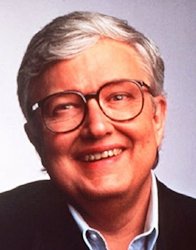
For movie lovers the world over, today is a very sad day. The most famous of all film critics, Roger Ebert, has died aged 70 after a long battle with cancer.
In 1967 he joined the Chicago Sun-Times as their film critic and had worked continuously since (with a short break in 2006/7 for cancer treatment). Through the years he gained a formidable reputation and was the first critic awarded a Pulitzer Prize for his work.
With partners, first Gene Siskel, then Richard Roeper, Ebert enjoyed success with syndicated television shows, including the long-running At The Movies. In his almost 50 years of criticism, he produced more than 9,000 reviews, a record that’s unlikely to be beaten.
He described his critical style as relativist saying, “When you ask a friend if Hellboy is any good, you’re not asking if it’s any good compared to Mystic River, you’re asking if it’s any good compared to The Punisher. And my answer would be, on a scale of one to four, if Superman is four, then Hellboy is three and The Punisher is two. In the same way, if American Beauty gets four stars, then The United States of Leland clocks in at about two.”
In 1968, when 2001: A Space Odyssey was released, many respected critics realized what a landmark it was, including Ebert, while others like Renata Adler of The New York Times, were short on praise. Adler wrote that the movie was “somewhere between hypnotic and immensely boring”.
In tribute to Roger Ebert, here is his 1968 review of one of my favourite films: 2001: A Space Odyssey. It was e. e. cummings, the poet, who said he’d rather learn from one bird how to sing than teach 10,000 stars how not to dance. I imagine cummings would not have enjoyed Stanley Kubrick’s “2001: A Space Odyssey,” in which stars dance but birds do not sing. The fascinating thing about this film is that it fails on the human level but succeeds magnificently on a cosmic scale.
Kubrick’s universe, and the space ships he constructed to explore it, are simply out of scale with human concerns. The ships are perfect, impersonal machines which venture from one planet to another, and if men are tucked away somewhere inside them, then they get there too.
But the achievement belongs to the machine. And Kubrick’s actors seem to sense this; they are lifelike but without emotion, like figures in a wax museum. Yet the machines are necessary because man himself is so helpless in the face of the universe.
Kubrick begins his film with a sequence in which one tribe of apes discovers how splendid it is to be able to hit the members of another tribe over the head. Thus do man’s ancestors become tool-using animals.
At the same time, a strange monolith appears on Earth. Until this moment in the film, we have seen only natural shapes: earth and sky and arms and legs. The shock of the monolith’s straight edges and square corners among the weathered rocks is one of the most effective moments in the film. Here, you see, is perfection. The apes circle it warily, reaching out to touch, then jerking away. In a million years, man will reach for the stars with the same tentative motion.
Who put the monolith there? Kubrick never answers, for which I suppose we must be thankful. The action advances to the year 2001, when explorers on the moon find another of the monoliths. This one beams signals toward Jupiter. And man, confident of his machines, brashly follows the trail.
Only at this point does a plot develop. The ship manned by two pilots, Keir Dullea and Gary Lockwood. Three scientists are put on board in suspended animation to conserve supplies. The pilots grow suspicious of the computer, “Hal,” which runs the ship. But they behave so strangely — talking in monotones like characters from “Dragnet” — that we’re hardly interested.
There is hardly any character development in the plot, then, as a result little suspense. What remains fascinating is the fanatic care with which Kubrick has built his machines and achieved his special effects. There is not a single moment, in this long film, when the audience can see through the props. The stars look like stars and outer space is bold and bleak.
Some of Kubrick’s effects have been criticized as tedious. Perhaps they are, but I can understand his motives. If his space vehicles move with agonizing precision, wouldn’t we have laughed if they’d zipped around like props on “Captain Video”? This is how it would really be, you find yourself believing.
In any event, all the machines and computers are forgotten in this astonishing last half-hour of this film, and man somehow comes back into his own. Another monolith is found beyond Jupiter, pointing to the stars. It apparently draws the spaceship into a universe where time and space are twisted.
What Kubrick is saying, in the final sequence, apparently, is that man will eventually outgrow his machines, or be drawn beyond them by some cosmic awareness. He will then become a child again, but a child of an infinitely more advanced, more ancient race, just as apes once became, to their own dismay, the infant stage of man.
And the monoliths? Just road markers, I suppose, each one pointing to a destination so awesome that the traveler cannot imagine it without being transfigured. Or as cummings wrote on another occasion, “listen — there’s a hell of a good universe next door; let’s go.”
Roger, you’ll be greatly missed. – 4/4 and two thumbs up.







 Zak From Downunder