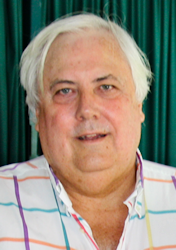
I know Clive Palmer’s new/resurrected United Australia Party (UAP) (now Palmer United Party) is a joke but it worries me that a couple of people in Australia might buy his TV ad. line, that both the Liberal Party and Labor Party are “all run by lobbyists”. It worries me a bit that this billionaire buffoon might actually be able to con enough votes to get a seat or two in September’s federal election. Worse than that, he might help Tony Abbott get elected (not that Tony needs much help), as almost all UAP preferences will be directed to The Coalition.
These ads are the ultimate in cynical Orwellian double-speak from Palmer, given that his self-financed Palmer United Party is in fact just such a lobby group serving the interests of only one person… Clive Palmer. At least regular lobbyists, obnoxious as some of them are, represent a community of interest (public or corporate).
Jeez Palmer must be a funny bloke to have a beer with if he can try this one on with a straight face. Oh, I had a quick look at his website… and when the hell did he become Professor Clive Palmer?
See the ads:
• UAP – United Australia Party – Clive Palmer – TVC – “Lobbyists 1”
• UAP – United Australia Party – Clive Palmer – TVC – “Lobbyists 2”
Is there anyone in Australia so lacking in intelligence that they might think this guy and his cronies are worth voting for?.
:: Please leave a comment ::
iReview:
Next week I’m planning to check out Iron Man 3 in 3D (it’s a threshold test to see how much torture my eyes can endure). Before I do, I thought I’d sit through a refresher with Iron Man 2. Unfortunately I don’t have the Blu-ray 3 disc (Blu-ray + DVD + Digital Copy) edition with all its spectacular extras, I only have the lamo 1 disc version. Fortunately though, the main event, the Blu-ray movie, is identical on both.
What Happens:
In the exciting sequal to Iron Man, Tony Stark (Robert Downey Jr.) is under pressure from a devious Senator Stern (Garry Shandling), abetted by arms manufacturer and nasty-piece-of-work, Justin Hammer (Sam Rockwell), to turn over his Iron Man suit to the US Military.
Meanwhile in Russia, Tony’s father’s one-time partner, Anton Vanko (Eugene Lazarev) is dying. His embittered son, Ivan (Mickey Rourke), vows to make Stark pay while also exacting revenge on the USA. With the assistance of Hammer, Ivan sets about executing his evil plans with an Iron Man suit of his own and an army of remote-controlled killer drones.
Story (Click to expand)
From the outset, the thundering notes of AC/DC, telegraph that this is going to a fun ride. As well, it provides a connecting thread to the first film (when Back in Black memorably blasted from the boom box in the U.S. Air Force convoy escorting Stark in Afghanistan). This time, Shoot to Thrill opens the show and Highway to Hell provides a fitting bookend. Merchandising for the movie also saw an AC/DC soundtrack album released to coincide with the film. Unfortunately, it was a soundtrack in name only, as most of its AC/DC songs did not appear in the movie and almost all the tracks that did, including those by Daft Punk and The Clash, were excluded.
With this branch of the super-hero universe there’s none of the noirish and forbidding tone of Christopher Nolan’sBatman trilogy, nor the facile treatment of Spider-man 3. While the Nolan series is in a league of its own, the Iron Man arc seems to place the movies squarely within the comic end of comic-book adaptations. That the filmmakers selected Pepper Potts (Gwyneth Paltrow) as a character, suggests they may also have had James Bond in mind as they fashioned this screen version of Stark. If you need convincing, take a look at Ivan Vanko (Mickey Rourke) with all his metal fangs and tell me that’s not an homage to Jaws (Richard Kiel) from The Spy Who Loved Me (1977).
Iron Man (2008) had a relatively straightforward mission to fulfill, giving us the origin story and a turncoat villain to defeat. The story was also linear with enough action and well written nuance, to more than satisfy critics and the legion of fans alike. For this sequel, the gallery of allies and rogues has been greatly expanded and I admit to fearing there was potential for Spider-man 3 syndrome (too many spinning tops in the plot and an abundance of uninteresting and underdeveloped characters). Happily, with Iron Man 2, I was reminded that a well developed and integrated script together with interesting characters backed by strong actors, can keep many tops spinning successfully.
In the same way that the very dour Christian Bale, personifies Nolan’s Batman, part of the genius of the Iron Man series series is the perfect synergy of character to actor. Before 2008 when the original was released, Robert Downey Jr. was viewed by many as a very charismatic and gifted, but also slightly dissolute, actor with a possibly limited future; just the man to portray Iron Man then. While super-hero action flicks don’t need great actors to succeed, they sure as hell can still elevate an otherwise good film. In this case, Downey carries the Iron Man franchise and gives the character the glint that makes the narcissist, egocentric Stark, an amusing and likable asshole. Add to that, the life threatening crisis imposed on Stark by the palladium in his ARC reactor chest implant, and somehow he becomes a sympathetic character as well.
Pepper Potts (Gwyneth Paltrow) returns as Stark’s exasperated and unstated love interest who progresses from overworked assistant to company CEO. Both Paltrow and new action princess, Scarlett Johansson (Natalie ‘Black Widow’ Rushman), were convincing.
Ivan ‘Whiplash’ Vanko (Mickey Rourke) is a welcome addition to the Villain Hall of Fame. Rourke’s skill as an actor, gives Vanko a depth of character that’s not obvious from the words on the page. His whip-cracking party trick that disrupts the race at Monaco is also the film’s memorable highlight. Spectacular as the this sequence was though, I did wonder, given that Stark only decided to drive at the last moment, how Vanko was so well prepared to meet him on the track… hmmmm.
Memorable as Vanko was, I think it’s unfortunately telling that his biggest moment comes so early. He had enough strength and physical presence for a lot more personal mayhem. So, while I enjoyed what we were allowed, I think he was well underutilized with all that brawn, just sitting around in the film’s second half. I would have been happier with a lot more Vanko destructo and less of the storm of clashing and crashing metal bots at the end.
Don Cheadle takes over from Terrence Howard, playing Colonel James ‘Rhodey’ Rhodes, Stark’s friend and link to the military. Rhodey’s got to deal with a few loyalty issues throughout the movie but, as you’d hope, the sidekick comes through in the end.
While most of the subplots and characters were well handled, I had a little trouble with the Justin Hammer (Sam Rockwell) plotline. This well connected military adviser and weapons specialist, was also completely corrupt and so consumed by ambition that he would do anything, including trusting a shackled, known terrorist to deliver a mega-weapon for him. He was also prepared to sweep aside any impediment to achieve his maniacal ends. Unfortunately, instead of the masterful, malevolent warmonger that would have been required to get to where he was, we got an evil, slightly more mocking, slightly less bumbling Colonel Klink. Ok, I’m being a bit harsh, but I think Rockwell was miscast.
Director, Jon Favreau, does a good job with the action sequences and otherwise staying out of the way. He also resists the temptation to give us a festival of action violence and keeps Downey’s charismatic face out of the suit as long as he can (unless it’s behind a heads-up display that is). He understands that the strength of this franchise, lies as much in the story Downey tells as it does in the comic-book’s flying metal suit. A lesser actor would certainly have spent more screen-time flying and busting metal and a lot less time appealing to the adults in the audience.
As with any super-hero actioner, there’s plenty of CGI but for perhaps the first time, I wasn’t conscious of the transition from drama to CGI action. The desktop created world fused seamlessly with the real, to the extent that I didn’t even think about it until after I’d sunk the last of my glass of Drambuie at the end.
Finally, I got a chuckle from the unexpected curiosity near the end of the credits: composer John Debney performing Mary Poppins’ songwriter, Richard M. Sherman’sMake Way For Tomorrow Today, a song right out of the Disney playbook, which follows the metal monster Highway to Hell by AC/DC. Oh, and if you hang in there, right to the end of the credits, there’s a short bonus scene.
The Picture:
There’s not a lot to complain about with this 1080p transfer. The cool blue hue of the image suits the genre and the attention to detail in the set design is impeccable.
The Audio:
From the crisp and raucous AC/DC beginning to the hellish Highway to Hell at the end, this is a cracker of a DTS 5.1 audio track. The energy pouring out the monitors during Vanko’s Monaco car-splitting hissy fit, was a joy. The Foley work throughout was meticulous and it showed in the crisp detail in this mix. For me, a signpost of a good sound field, is the lack of obvious signs. The explosions, the ring-tones, the camera shutters and the bullet strikes, all happen where you’d expect in the channel mix, and contribute to an enveloping and excellent track.
Verdict:
With the comic-book adaptation benchmark set so high by Nolan’s Batman trilogy, it’s pleasing to see that, while Iron Man 2 doesn’t attempt to scale those heights and doesn’t quite reach the standard of Iron Man (2008), it’s still a literate and fun addition to the super-hero genre.
iRate:: 3½ out of 5.
4Movie Tragics
Trivia:
• To prepare for his role as Ivan ‘Whiplash’ Vanko, Mickey Rourke paid a visit to Butyrka Prison, Moscow: “I tried to incorporate the whole Russian philosophy. It’s a culture of its own and I really enjoyed doing the research and meeting the people and they were very gracious there at the prison.”
• Five authentic vintage formula one race cars were used in the Monaco race, including a 1976 Lotus type 77.
• PayPal creator, Elon Musk’s development facility for SpaceX, doubled as Hammer’s factory with many actual employees acting as background extras.
• Cameo: Stan Lee, co-creator of Iron Man, appears as the man wearing suspenders who Stark identifies as Larry King.
• Cameo: Larry Ellison, the CEO of Oracle Corporation (a billionaire playboy, who has often been compared to Tony Stark) appears briefly at the Stark Expo. As he walks past, Stark says, “It’s the Oracle of Oracle”. Oracle’s brand is prominently placed at several points in the film, including the climactic showdown at a fictional “Oracle Biodome”.
Extras:
• Feature Commentary by Director Jon Favreau (This is an energetic narration that is interesting in the main but does occasionally annoy when Favreau veers into ‘Audio Descriptive Service for the Vision Impaired’ territory).
• SHIELD Data Vault (Provides interactive on-screen information that appears periodically during the movie, about characters, technology and weapons. Alternatively, this feature can be viewed as a stand-alone package).
• Previsualization and Animatics (Another feature that overlays information on-screen during the movie. This displays scene specific storyboards and scene animatics that give an interesting insight into scene development).
A few days ago, the Louisiana legislature rejected Senate Bill 26 which sought to repeal the 2008 Louisiana Science Education Act which allows for creationism to be taught as valid science in schools. Two previous attempts at repeal in 2011 and 2012 also failed.
As a high school student in 2011, Zack Kopplin started the repeal campaign with the support of 78 Nobel laureate scientists. He said at the time that he kept hoping that either an adult or an organisation would take up the issue. Dismayed that no one did, he took up the cause himself, even testifying before the state Senate. He is now a Rice University student and is still pushing ahead with this campaign.
Zack Kopplin (image: billmoyers.com)
In his most recent testimony, Kopplin was quoted by the Associated Press (May 1, 2013) saying, “This law is about going back into the Dark Ages, not moving forward into the 21st Century.” He added, “Louisiana students deserve to be taught sound science and that means the theory of evolution, not creationism.”
For me, one of the disturbing aspects of this issue is the support of likely Republican presidential hopeful, Louisiana governor Bobby Jindal for the creationist cause.
Last month, in an interview with NBC, Jindal said,
“I’ve got no problem if a school board, a local school board, says we want to teach our kids about creationism, that people, some people, have these beliefs as well, let’s teach them about ‘intelligent design’…What are we scared of?”
What we are scared of, is that the USA still exercises a critical influence in the world, so to have a person like Jindal as a potential leader of that country is frightening for the future of science and education.
For about half the last century, the USA led the world in academic excellence and scientific discovery. Then along came the religious nutters in the form of creationists who support the teaching of intelligent design as science, to help Americans find their way back to the 15th century. When I ask myself why news like Louisiana’s rejection of SB 26, makes me seethe with anger, I answer… It’s because the hubris of these closed minded politicians and the nutters they represent, causes millions of kids to be taught lies. They are sanctimonious bloody child abusers. These kids who don’t know better, rely on their teachers to safeguard their future and help them become fully functioning adults. Instead, by allowing the teaching of creationism and intelligent design as legitimate science, they’re raising a generation of kids who wont have the choice to become geologists, paleontologists, physicists, cosmologists, astronomers, anthropologists or biologists. You can’t teach the scientific method alongside creationism or intelligent design because they are incompatible. Creationism and intelligent design which is supernatural pseudo-science, cannot survive the scrutiny of the scientific method which requires that theory withstand all evidence. Creationism and intelligent design requires only that selective evidence support theory, while ignoring all evidence to the contrary. In other words, Creationists make the evidence fit the theory, not the other way round.
All natural science disciplines have provided us with overwhelming evidence that the world and the universe are billions of years old, so again they are incompatible with creationism and intelligent design which posits that dinosaurs co-existed with humans less than 10,000 years ago. All these scientific disciplines also require an understanding of the interwoven and independently verifiable history of our planet and universe not the untestable supernatural pseudo-science of creationism and intelligent design.
When you’re looking for oil, it helps if you have an understanding about the process that transforms dead organisms into liquid oil over millions of years. It helps if you know how tectonic plates have moved over millions of years so you’ve got an idea where to look. It also helps if you can identify rock stratification that has occurred over millions of years. So, if you’re a creationist who wants a job in Petroleum geology, forget it because there’s nothing in creationism or Intelligent design that will help you find oil, you need real science for that. If you’re developing new medicines, it helps if you have an understanding about how pathogens evolve and for that you need real science like evolution not creationism or intelligent design.
Louisiana is not isolated in its support of creationist pseudo-science. The rise of secular rationalism has seen Christian fundamentalists fight back with a strategy designed to circumvent the ‘separation of church and state’ by insidiously introducing this intelligent design crap-science into schools. This program is backed by the cleverly named Discovery Institute (remind you of anything? perhaps the Discovery Channel), a Seattle based right-wing Christian, Creationist lobby group, thinly disguised as a ‘think tank’. This pernicious organisation’s stated goal is to Teach the Controversy and create an aura of doubt around evolution. Its purpose seems to be to undermine the long established scientific method, which requires science theory be based on measurable and verifiable evidence, unlike the supernatural intelligent design pseudo-science which is not empirical science.
Indoctrinating kids with creationism disguised as legitimate science is the kind of blatant distortion of truth, dressed up as fact that was a hallmark of Hitler’s Nazi Germany. That’s why it makes me so f***ing angry.
More:
• Here is an excerpt from Kopplin’s 2013 Louisiana Senate testimony: Claude Bouchard, the former Director of the Pennington Biomedical Research Center, calls the LSEA “anti-science” legislation whose intent is to diminish the role of science in elementary and secondary schools when teachers discuss with their students such hot topics as evolution, the origins of life, global warming and human cloning.”
Dr. Bouchard says that the LSEA has economic consequences. “If you are an employer in a high tech industry, in the biotechnology sector or in a business that depends heavily on science, would you prefer to hire a graduate from a state where the legislature has in a sense declared that the laws of chemistry, physics or biology can be suspended?”
Because The Society for Integrative and Comparative Biology pulled a prescheduled convention from New Orleans in response to the passage of the LSEA, the repeal of this law is important to our state’s tourism industry.
According to Steve Perry, the President of the New Orleans Convention and Visitors Bureau, the LSEA “is a poor symbol of our state’s actual commitment to being on the cutting edge of modern science. And, it has a damaging impact on our bringing hundreds of millions of dollars of major international meetings and conventions in medical and basic sciences.”
Perry says “It is such an embarrassing, antiquated law to have on the books when we are making such transformational new investments in biotechnology, gene therapy, and neurosciences. With our entire country voicing the need for more investments in the teaching of science and mathematics, here we are re-living the kind of discussion the Catholic Church must have had with Galileo.”
• Creationist Science Committee Chair seeks to sideline Peer Review:
U.S. Congressman Lamar Smith (image : U.S. House of Representatives)
The creationist agenda has been boosted by the appointment of creationist, Texas Republican Congressman Rep. Lamar Smith, as chairman of the House Science Committee (truly ironic, given his anti-science agenda). Smith has proposed legislation, the High Quality Research Act, which implicitly provides for political judgments on research merit and could allow climate change deniers and creationists to weigh in on possible applications of research projects. Chairman Smith is pushing for the stripping of the peer-review requirement from the National Science Foundation (NSF) grant process and substituting a new set of politically motivated funding criteria that is significantly less transparent and not reviewed by independent experts (ie. scientists). The funding criteria also seeks to diminish the role of research that independently verifies experimental results, a result that wouldn’t displease climate change skeptics and the scrutiny averse creationists.
More links:
See Bill Moyers’ excellent April 2013 interview with Zack Kopplin (who knew that 46% of Americans believe God created the Universe and the Earth less than 10,000 years ago… scary):
Check out Kopplin’s 2011 testimony in support of repeal of the Creationist Law here:
Also see the complete Louisiana Senate 2013 hearings here (Kopplin’s testimony begins after about 80% has elapsed – look for SB 26 on screen):
• Louisiana Senate SB 26 hearings.
I think allowing creationism to be taught as legitimate science in schools is dangerous, because it doesn’t require the application of the scientific method and it therefore undermines and devalues rigorous science. Am I right?
Ted Cruz, the 42 year old Texas Senator and a likely 2016 GOP candidate for president, recently addressed the Republican Party’s Silver Elephant Dinner in South Carolina. According to Politico, “He brought the crowd to its feet by denouncing the administration for cracking down on proselytizing in the armed forces.”
Cruz was quoted saying, "The United States government has no authority to tell any American, in the military or not, that he or she cannot share their faith with others,” Cruz said, exclaiming: “You know, there comes a point where you just can’t make this stuff up!"
What The Pentagon is cracking down on is not people who pray but people who aggressively proselytize, particularly in sensitive zones like Afghanistan. Pentagon spokesman Lt. Cmdr. Nate Christensen said in a statement. “The Department makes reasonable accommodations for all religions and celebrates the religious diversity of our service members.”
“Service members can share their faith (evangelize), but must not force unwanted, intrusive attempts to convert others of any faith or no faith to one’s beliefs (proselytization),” Christensen added.
Cultural sensitivity would suggest against a unit of the US military, headed for Afghanistan, changing its nickname from the “Werewolves” to the “Crusaders”, complete with the medieval red cross, crusader shield insignia and a crusader knight as its mascot. But the VMFA-122 USMC fighter squadron’s new commander, Lt. Col. Wade Wiegel, was determined to do just that. Equally, going into battle in Afghanistan with your “Jesus rifle” complete with the Biblical references: John 8:12 and Second Corinthians 4:6, etched into its scope, would seem arrogant and just plain stupid. But, there are Christian soldiers who were incensed by The Pentagon’s directive to scrape them off. There are many in the military who welcome the comparison with the holy wars of the past that pitted 11th century Christian Crusader Knights against Muslim warriors in almost two centuries of merciless bloodthirsty conflict in Palestine. That The Pentagon is attempting to wipe out this influence seems only sensible in a region where ‘death from the sky’ drone strikes make the locals hypersensitive and where self-righteous, Bible carrying, western Christian soldiers are not particularly welcome.
Deep within the military, though, there is also the pernicious impact of unit commanders and other senior ranks, pointedly inviting their subordinates to attend Bible classes and prayer groups. When such Bible study and prayer groups grow from small informal gatherings into large, exclusive and influential cliques then The Pentagon is right to worry about unit cohesion and freedom from religious exclusion and conflict. It’s easy to see why a minority of non religious or non Christian lower ranks might liken this type of ‘invitation’ to a subtle form of intimidation, coercion or bullying.
So when a likely GOP candidate for president decides it’s important to make a stand against The Pentagon crackdown on aggressive Christian proselytizing, he’s also making a stand for intimidation of non-religious and non-Christian minorities while also holding up the standard of the murderous medieval Christian Crusaders for the US Military.
It beggars belief that Americans just don’t get why they are so despised in the middle-east, but someone like Senator Ted Cruz goes a long way to illustrating why.
If you’re a Christian from a majority Christian country put yourself in a different space for a moment and imagine you’re a Christian from a Muslim majority country and you’re being constantly harangued by Muslims urging you to abandon your infidel ways and worship the one true god, Allah.
So, how do you feel about the possibility of aggressive Muslim proselytizing then… Not so comfortable is it?
So, why do Christians do it to non-believers and non-Christians?
As I was approaching home after my morning stroll I met an angry young man (probably about 18) in a hurry, heading towards me in an old Hyundai with a cranking and much younger audio system. He was very annoyed at having to indicate and move out to go around me and stopped to yell at me to, “Walk on the f***ing footpath, arsehole”. I replied, “Thank you for taking the time to stop and remind me.” I think he missed the irony as he hurtled off.
When did life get so tough that using an indicator and turning a steering wheel could be so traumatic?
iReview:
Last Thursday, 25 April, was Anzac Day, the day Australians and New Zealanders acknowledge the sacrifice of all those who have served in war and peacekeeping. It also commemorates the men and women who have died in that service.
Anzac Day coincides with the landing of ANZAC (Australian and New Zealand Army Corps), French, British and other British Empire troops at Gallipoli in south west Turkey in 1915. The objective was to secure the Dardanelles to provide a sea route to reach the Russian allies and ultimately to take Constantinople (Istanbul) and knock Germany’s ally, Turkey, out of the war.
The eight month campaign that followed cost the lives of 53,000 allied (including almost 12,000 Anzacs) and 56,000 Turks with total casualties reaching almost half a million. Many thousands more, suffered from dysentary, a result of the appalling sanitary conditions encountered by the troops.
Despite the campaign’s ultimate failure, media reports reaching Australia extolled the heroism of the Anzac troops and stirred national pride in the young country which had federated as Australia only 14 years earlier. Albany, the south coast port city in my home state of Western Australia, was the embarkation point for the thousands of troops who left Australia for Gallipoli. Albany also has a special significance for my family as it was my children’s maternal grandmother who, 15 years ago, uncovered the evidence that confirmed Albany as the location for the nation’s first iconic Anzac Day “Dawn Service”.
The way Australians relate to Anzac Day has evolved over the years and has not always been as robustly and reverentially marked as it is today. I remember Anzac Day in the 1970s, as a holiday celebrated largely as a day off from work and school, with a sideshow parade of old soldiers who got together once a year to swap tales of war, gamble a little and imbibe a little too much. The Gallipoli Campaign that sporned the day of remembrance as well as the world wars that were commemorated, were remote, little known and of scant significance to many. At that time, many Australians were also disaffected with all things military as a result of the country’s involvement in the disastrous Vietnam War.
To acknowledge the significance of the day, I thought I’d revisit this best loved of Australia’s War cinema: Gallipoli.
What Happens:
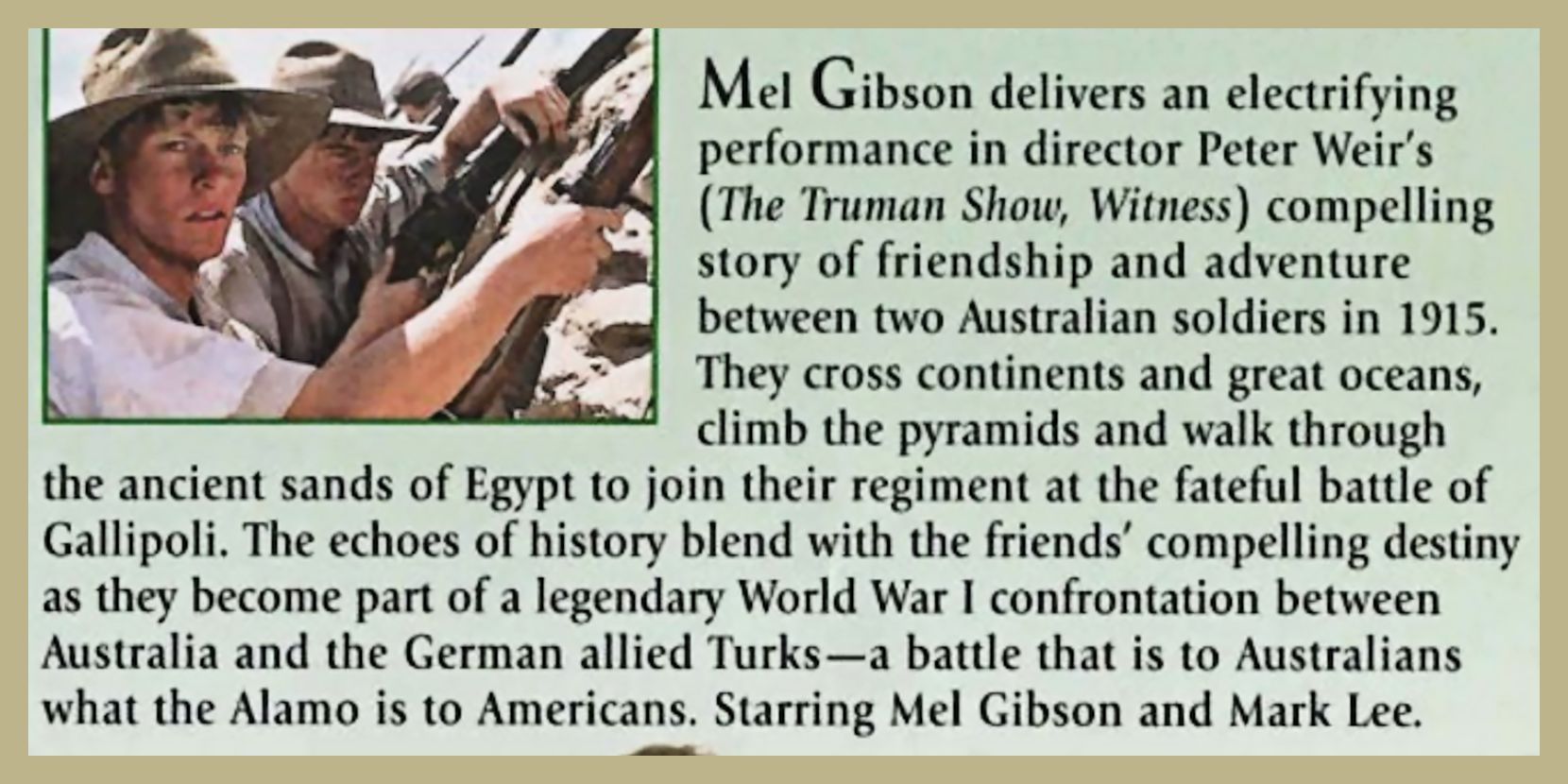
Eighteen year-old Western Australian champion sprinter Archy Hamilton (Mark Lee) could be an Olympic contender, but he disappoints his trainer Jack (Bill Kerr) when he instead enlists in the elite Australian Light Horse cavalry. He’s accompanied by talented sprinter Frank Dunne (Mel Gibson), who also attempts to join but can’t ride a horse and is relegated to the infantry with his other friends.
Training in Cairo, the Anzac cavalrymen are converted to infantry so Archy persuades his Major, Barton (Bill Hunter) to allow Frank to transfer to the regiment.
At Gallipoli in 1915, the Anzacs find that they’re being used as cannon fodder as a ‘diversion’ for British landings elsewhere, and the entire unit realizes that they must obey suicidal orders and charge Turkish machine guns, a lunatic event among a litany of incompetent military planning.
Story (Click to expand)
Since I last saw this movie many years ago, I’d forgotten that it starts out as a boy’s own adventure featuring a very young, very Australian and not so weird Mel Gibson. With the benefit of hindsight, it’s interesting to reflect on this nascent star and his subsequent and controversial career. It’s also interesting to reflect on the very different career trajectories of the two stars. Gibson, we know went on a stellar rise to the A-list in Hollywood while Mark Lee (Archy Hamilton) moved into relative obscurity.
The outback scenes that open the film are spectacularly shot with the heat, dust and desolation radiating off the screen. The stark monochromatic beauty of Australia’s hot, dry interior is a place best admired from the air-conditioned comfort of a 4 wheel drive. That many Australians willingly endured life in these and other hostile environs was the steel that forged the myth of the tough Anzac warrior. Williamson’s script is cloaked in this mythology and he uses it well to set up the main protagonists in this yarn.
Archy is a naive young man and a very talented runner who yearns for the adventure of Gallipoli that he has read and heard about. His sprinting rival, Frank (Mel Gibson) is a cynical descendant of Irish nationalists, and as such, has no desire to fight Britain’s war. At the time, Irish nationalists and unionists were in a bitter struggle over the future independence of Ireland from Britain. The speed with which Frank and Archy are transformed from rivals to such good friends that Frank is prepared to enlist with him, almost stretches my credulity and that’s despite the device of the desert trek bonding ordeal they endure that cements their close mateship. If Weir had taken more time to develop these characters, perhaps this wouldn’t have seemed such a stretch.
Generally, the performances of the cast, particularly, Mel Gibson are strong. Newcomer, Mark Lee also convinced, despite apparently having a particularly nervous time on set.
David Williamson’s script also moves the story well and although calculated to draw strong emotion, it doesn’t overindulge in overt tearjerking.
Although half the movie is set in Western Australia, none of it was filmed there. Lake Torrens in South Australia represented the desert in WA and Adelaide Railway Station stood in for Perth. The Marble Hall at the station also provided the set for the Cairo ball, before the troops shipped out to Gallipoli. Various beaches in South Australia, including Gallipoli Beach, were also used to depict the Gallipoli theater. On the other hand, the Cairo pyramid footage was actually shot on location and provides an interesting, and sometimes amusing, leg of the boy’s own adventure. The behaviour of the Aussies in Egypt as they mocked their British counterparts, also provided a neat metaphor for the rebellious teenager relationship, Australia shared with the mother country.
One of the film’s most memorable scenes was the eerily quiet and beautiful night arrival at Gallipoli; the looming terror juxtaposed with the brightly festooned and other worldly hospital ship offshore. And although for a time it looked like the boys were approaching a fun day at the seaside, the blood in the water, as they abandoned their cares and clothes and went swimming, reminded us of the deadly import of their endeavour.
The final scenes in the trenches were laden with the dread of what was coming, interspersed with the evocative strains of Giazotto’s Adagio in G minor. Major Barton’s attempt to shut out the war raging around him, listening to the duet from Bizet’s famed The Pearl Fishers opera, also provided a poignant moment in the buildup to the horrible climax.
On the morning of 7 August 1915, the Australian 8th and 10th Light Horse Regiments were to attack Turkish lines a mere 30 metres from their own. The attack in 4 waves, was to be immediately preceded by an artillery suppression barrage that fatefully ended 7 minutes early as a result of unsynchronised watches. The troops had already been instructed to remove ammunition from their rifles and fix bayonets. So hopeless was their position after the Turks were alerted by the barrage, that many went over the top without even their rifle. I’ll never forget the image of a bayonet being thrust into the wall of the trench to act as a hanger for a doomed soldier’s precious wedding ring. Knowing the terror that those boys must have felt as wave after wave went over the top to a certain death, enraged me today even as it did 32 years ago.
The futile attempts to get the 4 insanely suicidal charges of this Battle of the Nek called off, provided the closing argument in Weir’s prosecution case that: the Gallipoli Campaign was a cruel waste of talented young lives sacrificed by stupid and incompetent leaders. On a larger scale, it also symbolised the generation lost to the insanity that was World War I.
The final freeze-frame which evokes Robert Capa’s famous 1936 Spanish Civil War photograph The Falling Soldier, had me uncomfortably riveted to my seat with tears streaming, the first time round. Seeing it again, all these years later had exactly the same impact.
The Picture:
This is a film crying out for a Blu-ray release. The grainy, artifact laden sky in the early outback scenes, reminded me how disappointing the old DVD format picture can be. Russell Boyd’s wonderful cinematography, particularly in the early scenes, needs to be showcased in high definition.
The Audio:
I would have liked a DTS 5.1 audio track but the Dolby Digital 5.1 track was reasonably serviceable. However, the mix was heavily biased towards a simple front stereo with little distribution to surround or subwoofer channels. Frankly there was little difference between the quality of the output from my receiver and the sound generated by the surround speakers on the Panasonic 140cm flat screen monitor.
Verdict:
When I first saw this movie in 1981 it was very much a creature of its time, coming so soon after Breaker Morant and the widening scrutiny of Australia’s past as well as its relationship with Britain and the British Empire. So, with its huge success, this was also a triumph of its time. I’m pleased to say, it is still a wonderful and deeply affecting landmark in Australian Cinema.
iRate:: 4½ out of 5.
4Movie Tragics
Extras:
Disk One:
• Cast and Crew Bios and Filmography (interactive bio. & filmography text screens).
• Theatrical Trailer.
Disk Two:
• Interview with Peter Weir (interesting retrospective interview) – 15min.
• Interview with Mel Gibson (reflective interview filmed in 2005) – 12min.
• Boys Of The Dardanelles: Australian War Memorial Documentary (produced by the War Memorial to commemorate the men who fought and died at Gallipoli) – 22min.
• The Keith Murdoch Letter: The Letter That Changed History (a facsimile of the letter Murdoch wrote to his friend, Australian prime minister Andrew Fisher, which led to the removal of the Campaign commander, General Sir Ian Hamilton and the eventual withdrawal from Gallipoli. Note: Sir Keith was the father of Gallipoli producer and media mogul, Rupert Murdoch).
• Photo Gallery (30 production stills) – 2min.
• In Depth Gallipoli Material (library of interesting information stills).
• DVD-Rom Teaching Aids including a printable version of The Keith Murdoch Letter: The Letter That Changed History.
Trinity Episcopal Church
Cnr. Wall Street and Broadway, Lower Manhattan, New York.
If anyone ever wondered just how rich churches are in this age of rising disbelief… Check this out. The financial books at New York’s Trinity Church have been revealed in court documents arising from a bitter parish legal dispute over, you guessed it, money. This Episcopal church (a member of the US Episcopal branch of the Anglican Church or Church of England as you might know it) holds property valued at a whopping $2 billion within its parish, including some of the most prized real estate in Manhattan, near SoHo and Greenwich Village.
Michael Nagle for The New York Times Most of Trinity Church’s Manhattan real estate holdings are in the Hudson Square area, including a vacant lot at Duarte Square.
Also revealed, was the compensation package paid to the Trinity Church rector, the Rev. James H. Cooper who gets an annual salary of $US475,000 which rises to $US1.3 million when pension contributions and the imputed value of his opulent $5.5 million, church owned town house, are included.
So next time you look up at the pious face of your priest, ask yourself if his/her calling was inspired by the man in the simple cloth who owned nothing, Jesus, or was it just a canny career choice.
iReview:
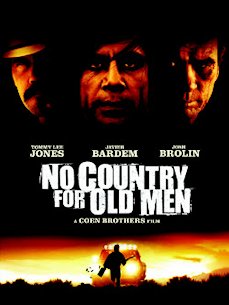
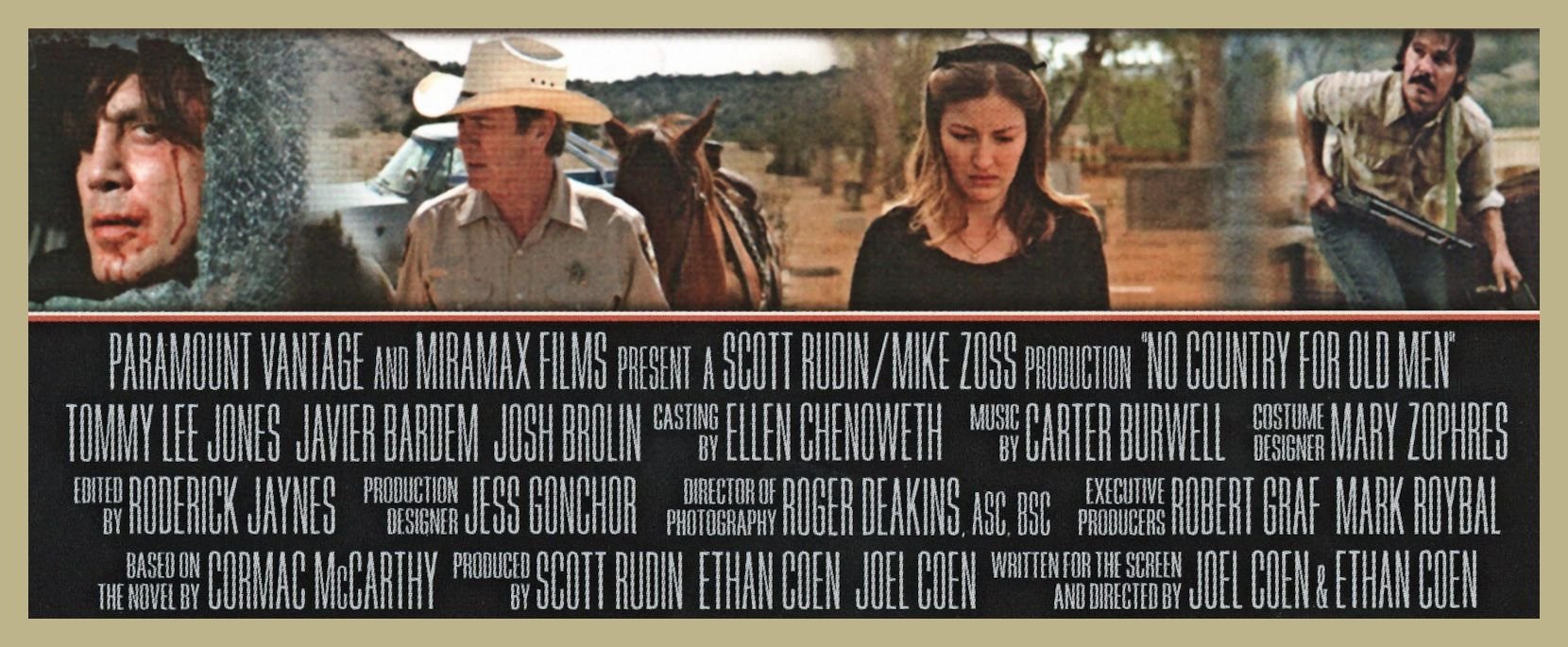
This week I decided to check out a movie I hadn’t seen before (unbelievably lame, I know), and also from this century: No Country For Old Men (2007). Universally praised and hailed as a filmmakers masterpiece, this movie also attracted an avalanche of awards. Joel and Ethan Coen share the record of four Oscar nominations for the same film with Orson Welles for Citizen Kane (1941) and Warren Beatty for Reds (1981). The Coens’ four nominations are for Best Picture (won as producers with Scott Rudin), Best Director (won), Best Adapted Screenplay (won), and Best Editing (under the pseudonym Roderick Jaynes).
What Happens:
Acclaimed filmmakers Joel and Ethan Coen deliver their most gripping and ambitious film yet in this sizzling and supercharged crime thriller.
When Llewelyn Moss (Josh Brolin) stumbles on a bloody crime scene, a pickup truck loaded with heroin, and two million dollars in irresistible cash, his decision to take the money sets off an unstoppable chain reaction of violence and his pursuit by a nerveless psychopath, Anton Chigurh (Javier Bardem). Not even West Texas lawman, Sheriff Bell (Tommy Lee Jones), can contain it.
“This magnificent film represents the best work the Coen Brothers have done since Fargo. Like that movie classic, this is a cold-blooded thriller with a darkly humorous edge… Hitchcock wouldn’t have done the suspense better.”
(David Stratton, ABC Australia, At The Movies)
“No Country for Old Men is as good a film as the Coen brothers, Joel and Ethan, have ever made, and they made Fargo.”
(Roger Ebert, Chicago Sun-Times)
Story (Click to expand)
While this is recognized as the Coen brothers darkest and most tense film, it is not lacking in their signature deadpan humour. I love the way they play with Cormac McCarthy’s language in this script (yes they directed, adapted and edited the whole thing). Here’s an exchange between Deputy Wendell (Garret Dillahunt) and Sheriff Bell (Tommy Lee Jones):
Wendell
“Well, it’s a mess, ain’t it, sheriff?”
Sheriff Bell
“If it ain’t, it’ll do till the mess gets here.”
McCarthy’s writing was clearly destined for the Coens’ delightful and mischievous adaptation. I can imagine the brothers glee as they saw these words; they and Cormac are kindred spirits.
The three main characters are all beautifully drawn: Vietnam vet. Llewelyn Moss (Josh Brolin), is an expert hunter who happens upon an unhappy scene with perhaps, happy consequence – a slew of bullet-strewn bodies, bullet-ridden trucks, a truckload of drugs and 2 million dollars in cash; Sheriff Ed Tom Bell (Jones), a very competent veteran lawman, the last in this family business, who seems slightly out of his time; and recovery guy, Anton Chigurh (Javier Bardem), the unflinching psychopath who carves a murderous path across Texas with his gas bottle and cattle stun-gun.
Brolin is entirely believable as Moss, a man who might just be able to stay one step ahead of the unstoppable Chigurh (pronounced chugar). Tommy Lee Jones, as the slightly world weary Bell, acts his socks off in this. He utterly inhabits the role with exquisite timing and tone, and an understated delivery that tells you he’s at the top of his craft. He also wears the vernacular like a Texas native (oh, hang on a moment, he is). Bardem was born to play Chigurh and he does so with pitch perfect characterization. You just know that if you bumped into Javier on an L.A. street, you’d regret the experience; he’s that good. The three story-anchors are ably supported by Scottish actor, Kelly MacDonald, as Moss’ wife Carla, who had me completely fooled – of course she was a Texan; Woody Harrelson plays himself delivering us Carson Wells, who was sent to end the out of control murder spree and recover the money; and Beth Grant, who gives us a short but memorable turn as Carla’s abrasive mother.
From the stunning red sky silhouette that stamps Roger Deakins’ entry into the film, you know there’s some wonderful photography ahead and he doesn’t disappoint. In much the same way as cinematographer, Tom Stern has become the right hand of director, Clint Eastwood, Deakins has come to exemplify the Coen brothers films. His framing is very precise and in almost all ways, I couldn’t imagine it done better. You only need to watch the featurette: The Making of No Country for Old Men (see extras), to see the contrast between the behind-the-scenes footage, and the finished shots.
The music from Carter Burwell, another staple of the Coen universe, is unobtrusive but appropriate, leaving space for the sound of the wind to weave its magic throughout the film.
I’ve left the best for last… The work of the brothers as directors, writers and editors is near faultless. None of the plot seems forced or contrived, even though the effect of the whole is completely quirky (as you’d expect from a Coen film). The stories of the three central intertwining characters rarely fully intersect yet they are told in such a way that you’re never left wondering. The dialogue is fluid and deliberate without anything superfluous or corny. The tension built by the direction and editing is perfectly fit for purpose with so many near misses and moments of possible discovery which keep us on the edge of the seat. The hotel/motel scenes where Moss and Chigurh never meet, are exercises in pure dread. Add to that, the device of the coin toss which creates another layer of delicious tension. And, like a cat toying with its prey, the Coen brothers leave us guessing which way the coin fell, the final time, until we see Chigurh check the soles of his boots on the path out front.
The luxury of having almost complete control of the film making process is a creative advantage few directors are afforded. Even fewer filmmakers, I suspect, would be able to handle these multiple disciplines with as much finesse as the Coens. Steven Soderbergh has often photographed (as Peter Andrews) and edited (as Mary Ann Bernard) the films he’s directed, with excellent results. However, I wouldn’t rate him quite in the same class as Joel and Ethan Coen. Here, the Coens have employed their extra limb (Deakins) on camera while they have control of every other major aspect of the look of the film. The combination of their shooting script, their dialogue, their direction and their precision editing, is a rhythm that is almost musical. I became conscious of this as I mused over their many cuts and cutaways and realized they were part of a dance which also included the delivery of the dialogue. It’s very clever and something only really achievable if you control the whole shebang as they did.
This would have been an impressive genre movie even if it had a conventional conclusion. But the ending that presents itself here, was so satisfying and original that I found myself laughing completely inappropriately. If you’re one of the other three people who haven’t yet seen this movie then I’m not going to spoil it by telling you.
The Academy got it completely right in awarding the filmmakers their Oscars for this movie; as a lesson in film making it is peerless.
As a critic, Roger Ebert, regularly placed himself in the seat of a genre fan, so he would not necessarily grade on an absolute scale (according to his taste) but rather gave a relative score. Thus on Ebert’s scale, if Superman (1978) scores 4 within the superhero genre, then Hellboy (2004) gets a pretty good 3 (even though Ebert really disliked the film) and The Punisher (2004) only a 2. If I were putting myself in someone else’s seat then, like Ebert (who scored this a 4/4), I’d have to give this 5/5. But, because I want to keep a perfect 5/5 for rare movies that completely blow me away, I am awarding this a 4½ / 5. Jeez, after an explanation like that, it might have been easier just to go the 5.
The Picture:
As you would hope, with a movie of this recent vintage, the screen image is superb. Every craggy wrinkle line, every speck of blood (and there’s a lot of that) and every bullet hole crack in the glass of Moss’ truck, is displayed in brilliant detail. The colours are rich and true and the image, clean with no visible noise.
The Audio:
I wish I’d had the foresight to have bought the Collector’s Edition with its possibly superior DTS 5.1 audio track. As it happens, this Blu-ray LPCM 5.1 sound track is more than adequate. As well, as this isn’t an action flick, the quality of audio reproduction isn’t quite as critical. There were times when the balance between speakers fell short of ideal. For example, occasionally, the right front and left surround channels dominated, leaving the left front unbalanced and slightly out of the mix. Apart from these occasional anomalies, though, the audio field sounded fine.
Verdict:
I’m embarrassed that it has taken me this long to see this movie, especially as I’ve had it in the library for some time. In a way though, I’m glad I waited because I think I can now appreciate the virtuosity of its construction a lot more than I would have only a few years ago. It’s a filmmakers tour de force and a film I’ll likely learn more from with each viewing.
iRate:: 4½ out of 5.
4Movie Tragics
Extras:
• The Making of No Country for Old Men (as well as the usual filmmaker discussion about inspiration and script development, there’s some interesting behind-the-scenes action from the set… an interesting featurette) – 24min.
• Working with the Coens (this is pretty much a PR gushfest) – 8min;
• Diary of a Country Sheriff (this character featurette looks at Sheriff Bell from a number of angles and compares him with Chigurh… enjoyable without being essential) – 7min;
Is this the best movie by the Coen brothers or does Fargo still top the list?
Have I got it completely wrong and has Stephen Hunter got it right in his Washington Post review, when he abruptly states, “I just don’t like it very much”?
Bullying is repeated and sustained verbal, physical, social or psychological behaviour by an individual or group, aimed at another individual with the intention of belittling, intimidating or controlling that individual. Bullying is also an insidious and traumatizing process for the victim. In a school, it invariably involves a stronger or older student targeting another younger, weaker or vulnerable student with sustained verbal or physical abuse over an extended period. In the workplace, bullying invariably involves the exploitation of a power imbalance and is often perpetrated by an insecure manager with low self-esteem who targets a vulnerable subordinate.
I’ve watched the devastating effects of bullying and it can have lifelong impacts…
Bullying… is not, an incident!
It annoys me when such a wholly despicable thing as bullying is lumped together with good old bad behavior and reported as: Australian swimmer Matt Targett “reprimanded” over a bullying incident which involved 5 times Olympic medalist Alicia Coutts (pictured). She was allegedly subjected to an incident of aggressive physical and verbal behaviour from Targett which occurred at the Perth tri-series meet in January.
Not nice for Alicia but if it’s one incident then it doesn’t rise to the level of bullying.
Stretching the meaning of the word, bullying to include any nasty interaction between individuals, dilutes and diminishes the value of the word in describing what it actually represents. This type of hyperbolic misuse of the word also serves to downplay the devastating impact that actual bullying can have on an individual.
Words matter.
Have you experienced bullying?
Are there other words that suffer from this type of hyperbolic misuse?
iReview:
With the death of famed Chicago Sun-Times critic, Roger Ebert (see my earlier Ebert post), I thought I’d have a look at one of his and my top 10 movies, Apocalypse Now. I recently obtained the 3 disc Full Disclosure Blu-ray Edition which includes the movie tragics must-have Hearts of Darkness: A Filmmaker’s Apocalypse, the 1991 documentary chronicling the making of the film. The package also includes the 1979 cut of Apocalypse Now and an ammo dump full of interesting extras. I wasn’t able to source this set in-store so I was forced to find it online (I’ve included convenient links to search on eBay and Amazon (UK) below).
What Happens: Francis Ford Coppola adapted the Joseph Conrad novella Heart of Darkness (set in the Belgian Congo, Africa) to depict the Vietnam War as a descent into primal madness. Capt. Benjamin Willard (Martin Sheen), already on the edge, is assigned a secret mission to find and deal with AWOL Col. Kurtz (Marlon Brando), who has set himself up in the Cambodian jungle as a cult warlord. Along the way up-river, Willard encounters: the lover of napalm and Wagner, Col. Kilgore (Robert Duvall); soldiers who prefer to surf and do drugs: a troupe of USO Playboy Bunnies, whose show turns into a riot; and a manic photographer (Dennis Hopper), who tells wild, reverential stories about Kurtz. By the time Willard sees the scattering of heads at Kurtz’s compound, he knows Kurtz has gone insane…
Story (Click to expand)
It’s been many years since I saw the 2001 Redux version of this film and a year or so since my last visit with the original 1979 cut, so I arrived for this marathon sitting of Redux with relatively fresh eyes.
Now that I know Martin Sheen (Capt. Benjamin Willard) was actually very drunk when filming the first bedroom scene in which he did his best to destroy the set, the scene has acquired added significance. The blood was also real as Sheen cut his hand in the process. This scene becomes emblematic of the production chaos of the Philippines’ shoot, with a typhoon destroying the set and Sheen’s near fatal heart attack (which was kept secret, with his hospitalization ascribed to ‘heat exhaustion’). The intrigue surrounding the production is one of the things that makes the warts-and-all Hearts of Darkness: A Filmmaker’s Apocalypse documentary (on disc 3), compiled from footage shot by Eleanor Coppola, so compelling. There’s the revelation that half the cast were using marijuana, speed or LSD or all three, and often while filming. Add to that, the news that Laurence Fishburne (Clean) lied about his age to get the part as he was only 14 when filming began; that a nearby Islamic insurgency resulted in the frequent and sudden departure, often while filming, of the leased Philippines military helicopters, called away to battle; that the scheduled 6 week shoot was repeatedly extended to an eventual 16 months; that shooting delays resulted in Brando pocketing his already paid $1 million advance on his $1 million per week salary and almost walking away, rather than reschedule his three weeks on set; that Brando arrived dramatically overweight and concerned about his appearance and required that only scenes showing him in shadow be included in the film; that Brando arrived completely unprepared having read neither the novel (Heart of Darkness) or the script (something he was notorious for); that Brando insisted on detailed consultation with Coppola, sometimes lasting days, before improvising scenes, all while the cast and crew were waiting on standby; and that the budget blew out to $40 million, a record at the time. There’s also the shocking and highly confronting footage of the ritual, brutal killing of pigs and the hacking to death of the water buffalo that appears at film’s end (I think its eyes will haunt me for a very long time). The documentary also brilliantly illuminates the insanity of the shoot which seemed to mirror the insanity of the Vietnam War and the madness on screen. If you don’t want your viewing of the film to be tainted, I’d recommend you leave this documentary ’til last.
Apocalypse Now was always episodic, as road movies often are, with set pieces revealed as Willard and the river patrol boat crew, progress up the Nung River towards Cambodia. But in Redux, this aspect of the story is accentuated with the addition of scenes featuring the stranded ‘Bunnies’ and the French colonial plantation compound.
After so many previous viewings, there’s still the pleasure of anticipation, waiting for the arrival of Colonel Bill Kilgore (Robert Duvall) who leads his airborne chopper cavalry and is surfing obsessed, seemingly invulnerable, and just loves “the smell of napalm in the morning”. He also has a lust for mass carnage, accompanied by a bellowing rendition of “Ride of the Valkyries” by Wagner.
Next up the river, there’s the USO show featuring the troupe of Playboy Bunnies, who arrive by chopper, parade provocatively, get mobbed in a riotous scramble, and retreat to their chopper in a cloud of smoke.
By the time I’d arrived at the chaotic MedEvac station with the stranded ‘Bunnies’, the first major departure from the 1979 version, I realized I needed to see the original again to put Redux into perspective (hence the delay in publishing this post). And frankly, while the original stand-alone USO Bunnies show scene, illustrates the detachment of US resolve and ineffectiveness in war fighting, the added MedEvac scene seems an unnecessary adjunct which muddies (excuse the pun) the thread of the story and adds only a negative aesthetic to the movie.
Moving up the river, Chief (Albert Hall) spots a sampan and, against Willard’s advice, they stop and search the boat. As Chef (Frederic Forrest) belligerently searches the sampan, Clean (Laurence Fishburne) unexpectedly opens fire on the boat. What ensues is the My Lai Massacre moment of the movie.
With each encounter, as they progress further from civilization, the crew’s grip on sanity wavers a little more. By the time they reach the chaotic Do Long bridge outpost with its precarious suspension bridge and no discernible chain of command, Willard and his men seem like an island of calm in a swirling nightmare.
I’m neutral about the efficacy of the added French colonials scene in Redux. At the time of the release of the 1979 cut, the Vietnam War was still extremely raw in the American Psyche, having ended only 4 years earlier. It’s perhaps understandable then, that Coppola decided not to pollute the ‘descent into the madness of America’s Vietnam War‘ theme with a discourse on the colonial era. Thirty four years later, that anti-Vietnam War focus of the film, perhaps, doesn’t need to be so sharply defined, so the departure into French colonial history adds an interesting side-track. Filming it at all may have been a subtle nod to Conrad’s original Heart of Darkness, set in the French speaking, Belgian Congo colony.
The horrific scenes awaiting what’s left of the crew, when they arrive at Kurtz’s compound, seem entirely appropriate, given the portents that accompanied their journey.
Coppola’s additional Kurtz Compound scenes in Redux, add another layer of insight along with subtle changes to Kurtz’s character. In the original, Kurtz was made more poetically enigmatic by his shadowy illumination. In Redux, Kurtz is just plain mad. At the time of production, Marlon Brando was something of an actor demi-god, so it was understandable that he and Coppola were concerned that his obesity might be an unwelcome distraction, hence the noirish camera work. With Brando’s immensity no longer a novelty, it’s interesting to see the additional ‘lit’ scenes as they ‘flesh’ out Kurtz’s personality (stop with the puns, already!).
This intense week-long immersion into the Apocalypse Now universe has been fascinating for me and has led to the conclusion that on balance, I marginally prefer the original cut to Redux. However, they each stand, in their own right, as monumentally stunning achievements in film-making. Watching both films in reasonably close proximity, also gave me an unexpected look behind the curtain to the art behind movie-making, as I was able to see great examples of the editor’s craft. That for me was worth the price of admission (in this case the cost of the Blu-ray set).
The Picture:
I’m pleased that Coppola prevailed with the 2.35:1 aspect ratio rather than Cinematographer, Vittorio Storaro’s preferred 2.0:1 (used on previous releases) which chopped the frame and occasionally caused oddly skewed shot framing and pans.
This transfer to Blu-ray while not quite as stunning as some I’ve seen recently (I’ve been spoilt), is nevertheless beautifully rendered and a pleasure to watch. It might just have been me, but this new Blu-ray palette also seems to have a slightly heavier yellow hue than previous versions, giving the image a warmer look than I’d like (it’s OK, I’m already kicking myself for nit-picking).
Overall, the screen image is clean and well defined with Kurtz’s disembodied head brilliantly defined and contrasted against deep black. Also look out for the way Willard’s face is lit while he reads the Kurtz dossier on the deck of the patrol boat. And let’s face it, Storaro’s photography is breathtakingly sumptuous, especially in the film’s first half. I’m also conscious of the fact that Coppola needed to incorporate previously discarded footage, which can’t have been easy, and then colour grade both films for consistency. To have created such a seamless result is astonishing. If you need confirmation of just how good it is, check out Richard Donner’s 2006 cut of Superman II which is good but not nearly as consistent as Apocalypse.
The Audio:
The Blu-ray DTS 5.1 sound track is one of the best I’ve heard, particularly the woofer’s rumbling bass. The balance and sweep of the sound effects mix is awesome with helicopters tracking seamlessly from monitor to monitor. The sound field is completely immersive, especially at higher volume (I hope the neighbours weren’t too annoyed).
My only complaint about the soundtrack is an issue of personal taste: I would have much preferred a score without the heavy and dated synthesizer. A completely contemporary rock track or even an orchestral score would have been fine. Unfortunately, the mix of great ’60s and ’70s rock tracks interspersed with nondescript synth. just didn’t do it for me.
Verdict:
This movie was already in my top ten so my expectations of this release were high. I’m so pleased that Coppola has allowed his two versions of Apocalypse Now to co-exist as they are each wonderful in their own way. I’d say, if anything, this new Blu-ray package with its incomparable set of extras, has enhanced my impression of the films. So hats off to the guys who took such care putting this together.
Extras:
• Feature Commentary by Director Francis Ford Coppola (complements the Hearts of Darkness: A Filmmaker’s Apocalypse documentary quite well. I’d be inclined to listen to the commentary on Redux, as it’s full of interesting production notes and anecdotes. As well, the commentary track for the original version was edited down from this one).
Disc Two:
• A Conversation With Martin Sheen
(Sheen and Coppola reminisce about the casting, drugs, alcohol, tigers, the heart attack, and much more… interesting) – 59min;
• An Interview With John Milius (here Coppola and Milius discuss their writing process and the script’s evolution as they drill deeply into the screenplay. They also briefly touch on Milius’ own military ambitions and how that played into the screenplay… one for the geeks and illuminating and enjoyable) – 50min;
• Fred Roos: Casting Apocalypse (includes screen test footage and features the film’s casting director, Roos, talking about the hundreds of actors tested for various roles) – 12min;
• ‘Apocalypse’ Then and Now (has some brief snippets from Roger Ebert’s Cannes interview with Francis Ford Coppola) – 4min;
• 2001 Cannes Film Festival: Francis Ford Coppola (the entire Ebert Cannes interview) – 39min;
• PBR Streetgang (profiles and reflections from the actors playing Willard’s patrol boat crew: Laurence Fishburne, Sam Bottoms, Albert Hall, and Frederic Forrest) – 4min;
• “Monkey Sampan” Deleted Scene (a disturbing deleted segment featuring a boat overrun with monkeys and natives singing “Light My Fire”) – 3min;
• Additional Scenes (12 timecoded scenes including Lt. Richard M. Colby (Scott Glenn) dialogue and undoctored footage where the name of Brando’s original character name, Col. Leighley, can be heard) – 26min;
• Destruction of the Kurtz Compound (the jettisoned final credits sequence which Coppola ultimately rejected when he feared audiences were misinterpreting it) – 6min;
• The Birth of 5.1 Sound
(a fascinating Dolby Labs presentation which looks at how Apocalypse Now led to a revolution in film surround sound design) – 6min;
• Ghost Helicopter Flyover
(sound engineer, Richard Beggs, explains how the surround sound design for the opening helicopter sequence was created) – 4min;
• The Music of Apocalypse Now (looks at how the various musical elements: The Doors, synthesizer music, orchestral and percussion work were integrated together) – 15min.
• The Synthesizer Soundtrack (a text screen reprint of a Bob Moog article from Keyboard magazine);
• Heard Any Good Movies Lately? The Sound Design of ‘Apocalypse Now‘ (Coppola, Walter Murch, Richard Beggs, and post-production recordist Randy Thom talk about and show us how the revolutionary sound design for the film was created) – 15min;
• A Million Feet of Film: The Editing of ‘Apocalypse Now‘ (a great look at how Coppola and editor Walter Murch pulled a coherant film together from the immense stock of scripted, experimental and improvised footage) – 18min;
• The Final Mix (Randy Thom introduces some great footage of the multi-room setup which was necessary to achieve the final mix for the film) – 3min;
• The Color Palette of ‘Apocalypse Now‘ (Vittorio Storaro attempts to explain the technical aspects of the three strip dye transfer Technicolor process utilized on the film) – 4min.
• The Hollow Men (an odd little period (circa 1979) featurette with Brando reciting Eliot’s poem with scenes from the film and the shoot) – 17min;
• Mercury Theater Production of ‘Heart of Darkness’ (audio presentation of Orson Welles production of Joseph Conrad’s novella… some of the audio quality has suffered with time.) – 37min.
Disc Three:
• Hearts of Darkness: A Filmmaker’s Apocalypse (the fascinating behind-the-scenes documentary compiled from home movie footage shot by Coppola’s wife Eleanor. The film includes audio from tapes she recorded without Francis’ knowledge for what she, at the time, expected to turn into a diary. The chaos and intrigue surrounding the making of the film, makes this compelling viewing. As if that’s not enough, there’s also an optional and very interesting commentary track from the Coppola’s.) – 99min.
• John Milius Script Selections with Notes by Francis Ford Coppola
(text screens);
• Storyboard Gallery (with more than 200 screens);
• Photo Archive (a huge trove of production and candid stills together with some Mary Ellen Mark photography);
• Marketing Archive (featuring the 1979 trailer, radio spots, theatrical program, lobby cards, press kit photos, and a poster gallery).
Printed Material:
• A 48-page Full Disclosure booklet which features a written introduction from Francis Ford Coppola, script excerpts (with notes scrawled over them), production photos, storyboards, sketches, and other production art.
• An Apocalypse Now booklet with production notes, credits and cast and crew biographies.
• 5 Black & White postcards.










 Zak From Downunder