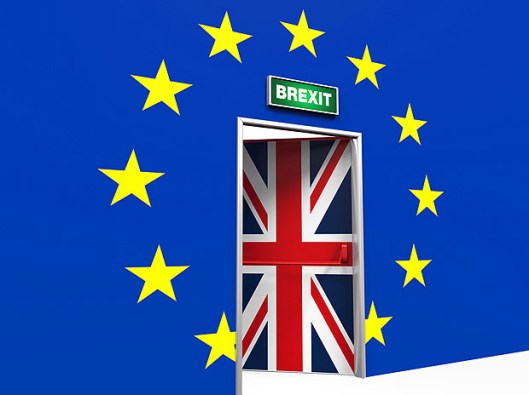
This is the darkest day for Britain since the Second World War and a day that also marks the beginning of the end of the UK.
What a scared, narrow minded, backwards little country England has become? There are millions of people who don’t look like Boris Johnson who will be waking up in England today shit scared of the mobs that will now feel that their neo-fascist inclinations have been vindicated. Not everyone who voted for ‘Brexit’ is a football hooligan but you can bet the house that every single one of those neo-nazi thugs voted with Boris and his band of extremists. Within 3 months (unless in the interim, he becomes the most reviled man in the Britain), Boris Johnson will be hoping to be the prime minister of the UK. This was always his objective, and what a self-serving and miserable objective that was. Boris will be well pleased with himself but his reckless indifference to the welfare of his fellow citizens, most of whom do not have his intelligence, knowledge, political judgement or privileged Etonian background, is gobsmacking in its audacity.
So craven is this lust for power, I think many would suggest, it’s a safe bet that if David Cameron had supported ‘Brexit’, Boris would have led the campaign to stay.
Scotland, who overwhelmingly supported the vote to stay in the EU, will surely now vote to leave the UK and to remain in the EU, before the final English exit from Europe within the next 2 years.
Northern Ireland also voted heavily to remain in the EU so it’s very likely that there’ll be a renewed push for Irish unification and continued EU membership (as part of Ireland). As part of Europe the border between the north and the rest of Ireland, had become nebulous and increasingly unimportant with residents freely crossing north and south. With ‘Brexit’, Britain will have only one land border between itself and Europe and that will be the contentious border in Northern Ireland. The reinstatement of formal border controls between the two parts of Ireland (one British, the other, Europe), will only heighten the separation and open old wounds and renew tension and troubles. Northern Ireland, Deputy First Minister, Martin McGuinness (Sinn Féin) has already called for an Irish unity vote. It’s hard to imagine that the Good Friday accord, that ended the violence in Northern Ireland, won’t be severely tested, with the fury this vote will unleash in Belfast.
And apart from the turmoil that this vote and the disintegration of the UK will bring to Britons, there’s also the inevitable retribution from Germany and France that will follow this vote. As an example to the rest of Europe, they will be relentless in punishing Britain for ‘Brexit’. They will ensure that there’s no business-as-usual in trade and access to the EU. Doors will close, phone calls will go unanswered and a big chunk of Britain’s biggest industry, financial services, will move to Dublin and Frankfurt.
When the dust finally settles on this calamity, England will shrink into real obscurity. Sooner than might otherwise have happened, Britain, as we know it, will cease to exist and in all probability, will have a doubtful hold on its UN P5 place, and with it the last vestige of its hollow imperial greatness. What a great price Britain will pay for Boris Johnson’s hissy fit vanity project. And what a great price they will bear for David Cameron’s lack of leadership and courage to face down the call for this referendum in the first place.
There are clear moments in history when leadership failure has had catastrophic consequence: one when Neville Chamberlain arrived back in London waving his capitulation to Adolph Hitler and proclaiming he’d achieved “Peace for our time”, months before Hitler invaded Poland; and another when David Cameron secured his place as prime minister by agreeing to this referendum but at the cost of the very country he so desperately wanted to rule.
With this cataclysmic vote, the march towards a new neo-fascist rise in Europe now seems almost unstoppable. Hungary and Poland already have Eurosceptic far right governments with neo-fascist undertones. France’s own far right National Front, who are also campaigning to leave the EU, is already the second largest party in that country. Even Denmark, a former poster child for progressive social and economic values, has lurched troublingly to the right under its new radical hard-right prime minister and, has distanced itself from the European project.
Only a few years ago the European Union was controversially awarded the Nobel Peace Prize with the citation: “for over six decades contributed to the advancement of peace and reconciliation, democracy and human rights in Europe”. That hope for: that peace; that reconciliation; that democracy; and that human rights is now in tatters.
I know it’s customary to subordinate feelings of ill-will towards the deceased and apply the dictum ‘If you’ve got nothing nice to say, just say nothing’, but having obeyed for several days, I found the flood of memories about Margaret Thatcher too strong.
As a committed groupie of free market neo-liberal guru, Friedrich Hayek, Thatcher came to power in 1979 with the intention of sweeping away impediments to Capitalist power like the Welfare State. She was a firm believer in the Free Market but was never able to describe how a fundamental key to the beneficial operation of such a market could be achieved: perfect knowledge. When cheap horsemeat is substituted for beef, in a Hayekian, Free Market world, free of inspectors and testers (because they’re not needed in Hayek’s view), the consumer would require the supply chain be obvious to all before they could make the informed decision about buying the delicious cheaper product. As well, when strange instruments related to sub-prime mortgages were marketed to national and municipal governments around the world, the buyers completely understood that they were purchasing a toxic asset because they all knew exactly what they were buying. They also knew they were hastening the collapse of the world economy in 2008 and the onset of the current Euro crisis, with their investments. The silly idiots went ahead and did it anyway… NOT!! Hardly anyone, including the people flogging these diabolical products and the rating agencies, had any idea what they really were. So much for the Free Market. Incidentally, the 1986 Big Bang, as it’s called, was the Hayek inspired banking deregulation, championed by Thatcher, that then forced American deregulation and set in train the series of events that culminated with the 2008 crash…
Thanks Maggie!
Thatcher also trashed the legacy of Clement Attlee, the architect of Post-War Britain. Where there had been a settled consensus regarding the shared underpinning of society within the Welfare State, Thatcher proclaimed “there is no such thing as society”. She coldly advanced the notion that we are all alone as she promoted individualism, competition and greed. To those who claim she did what was necessary to reform the country, I’d say there were many paths to reform. She could have chosen something a little more inclusive like a Scandinavian model. Instead, she chose to embark on a sharp elbows era of dog-eat-dog economics, designed to create a brutal, nasty but efficient Britain. The innocent and hapless victims of this compassionless policy were further battered by slashed safety net support and a sharp reduction in the construction of public housing which caused greater hardship and homelessness (ironically, this was a program that had been championed by a previous conservative prime minister, Winston Churchill, in the 1950s). As Glenda Jackson, former Academy Award winning actress and MP for Hampstead and Kilburn, put it, “Every single shop doorway, every single night, became the bedroom, the living room, the bathroom for the homeless.”
See Jackson’s speech here:
At the time Margaret Thatcher came to power, the North Sea Oil bonanza was contributing more than 15% to Britain’s GDP. Instead of investing for the nation’s future with this windfall, as did the other beneficiary of the boom, Norway, she cut the tax rate for the rich. But despite her low-tax mantra, she also almost doubled (to 15%) VAT (Value Added Tax) which, because it’s a sales tax, hurt the poor much more than the wealthy.
Just when polls indicated she was headed for a landslide defeat at the upcoming 1983 elections, the Argentinian’s saved Thatcher by occupying the Falklands, a group of small islands they knew as the Malvinas. The Argentinian’s had claimed since the 19th century that the islands were stolen from them by the British. Thatcher’s government all but put out the welcome mat by indicating an unwillingness to defend the islands by ending their military presence (already reduced to one ice patrol vessel, HMS Endurance). Despite warnings from the Royal Navy and the growing belligerence of the Argentinian Junta, the British were conveniently ‘taken by surprise’ by the occupation. The military operation to retake the islands included the sinking of a retreating Argentine cruiser, the Genral Belgrano, with the loss of 323 lives. The Falklands war resulted in the deaths of 649 Argentine, and 258 British personnel but gave birth to the Iron Lady, wrapped her in the flag and led to a resounding election win.
When confronted by a militant union, the National Union of Mineworkers, did Margaret Thatcher attempt to find a new industrial relations path, like the Germans had done, that avoided the need for unions to use the blunt and destructive strike as a negotiation tool? Did she seek to reform unions to make them more democratic, accountable and effective? No, instead she pledged to defeat “the enemy within”, a phrase that wouldn’t have seemed out of place in Hitler’s Germany, and embarked on a long civil war against the union movement with the assistance of the police, Special Branch and MI5 (the internal spy service).
As it happened, the coal mines were at the sharp end of Thatcher’s plan to reshape Britain, not gradually as previous government’s had done, but with a short and destructive shock. Her pit closure regime resulted in untold hardship as whole towns were laid waste and communities ripped apart. By the time she’d finished applying the wrecking ball to British industry, manufacturing output had collapsed by 30%, she’d added 3 million workers to the unemployment queue and millions of families to her resume of misery.
In her relations with the rest of the world, Margaret Thatcher had a mixed record. She could claim most of the credit for softening up the stridently anti-communist Republican Party in the USA to the idea that it was OK to deal with the Communist USSR, when she famously declared that, “I like Mr. Gorbachev; we can do business together.”. This was a year before he became Soviet Leader and it certainly gave US president Ronald Reagan the necessary cover to seek a deal with the Soviets. In 1979, she was also instrumental, with the assistance of Australian negotiators, in reaching the Lancaster House Agreement which settled the Zimbabwe independence conflict. Not so laudatory, was her well known and blatant racism (something Australian Foreign Minister, Bob Carr recalled well). She also famously found herself on the wrong side of history in supporting the racist Apartheid regime in South Africa against the international community’s call for sanctions, even welcoming South African prime minister, P. W. Botha, to Britain in 1984. This stand put her sharply at odds with other Commonwealth countries, including Australia and Canada who were at the forefront of the sanctions movement. Thatcher went even further, branding Nelson Mandella a terrorist.
Her support for Chile’s murderous Pinochet regime represents another low point. Thatcher never resiled from her position, even publicly and warmly meeting with Pinochet after he had become an international pariah in the decade before his death. In 1999, the reason for that unwavering support was revealed: Alone among Latin American countries, Chile had provided extensive covert support to the British during their 1983 Falklands war with Chile’s neighbour, Argentina. This action, which almost certainly guaranteed British success, was undertaken at great risk to Pinochet as Chile were greatly outgunned by Argentina and could have suffered grave consequences if this complicity became known.
Unfortunately for Margaret Thatcher, distant memory hasn’t rehabilitated her legacy, as Thatcherism, the ideology that polarised much of the Western World, is still very much alive and cruelly unwell. The divisiveness of her government is also still very raw for many of those old enough to remember. As well, she had the bad fortune to die at a time of rising unemployment and widening economic inequality, declining upward mobility, and entrenched and worsening poverty (fittingly ironic, given she had a big hand in creating those conditions). As well, there is a worthy reminder of her reign in David Cameron who has instituted a deep austerity of his own, with massive welfare cuts, in the middle of a long and painful recession. The offspring of her policies are still being born into a Britain where the process Thatcher began, continues with cuts to disability pensioners and the backdoor privatisation of the cherished NHS (National Health Service).
I think, as well, salt has been ladled into the open wound by Cameron’s insensitive decision to give Thatcher, what amounts to, a State funeral (minus the actual lying in state but with everything else, including the traditional gun carriage). Little wonder then, that the cruelly intentioned, Wizard of Oz song, Ding Dong! The Witch Is Dead, has become the anthem of her death and has rocketed to the top of the charts.
For the geeks:
To get a flavour of the times, here are several films that depict Thatcher’s Britain – a land of poverty, violence and racism – including: Stephen Frears’s My Beautiful Laundrette (1985); Riff-Raff (1991), directed by Ken Loach who slammed Thatcher as “the most divisive and destructive Prime Minister of modern times” and called for her funeral to be privatized and handed to the lowest bidder, consistent with her economic policies; Brassed Off (1996); and Billy Elliot (2000).

 Zak From Downunder