• About

Zak From Downunder

~ Zak de Courcy's sometimes incendiary thoughts about politics, life and religion.

Zak From Downunder

Tag Archives: Epic

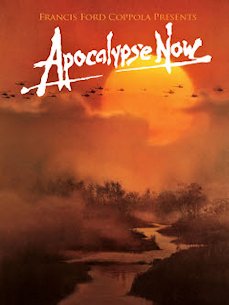
The Sunday Screening Session….. Apocalypse Now (1979)

14 Sunday Apr 2013

Posted by Zak de Courcy in Film

≈ 3 Comments

Tags

1970s, Abandon All Hope, Adventure, Adventure Drama, Albert Hall, Anti-War Film, Apocalypse Now, Apocalypse Now Redux, Cambodia, Cold War Film, Dennis Hopper, Drama, Epic, Film, film review, Francis Ford Coppola, Frederic Forrest, Guy Movie, iRate:: 5 / 5, John Milius, Jungle Film, Laurence Fishburne, Marlon Brando, Martin Sheen, Modern Classic, Robert Duvall, Roger Ebert, Sam Bottoms, Slow Burn, Starpower, Sunday Screening Session, Vietnam, Vietnam War Era, War, War Epic

Apocalypse Now (1979) (196 min)
iReview: Version: Apocalypse Now: Full Disclosure Edition (Blu-ray);
Video: AVC 1080p; Audio: DTS 5.1.
Genre:: Adventure | Drama | Epic | War |
Sub-Genre/Type:: Adventure Drama | Anti-War Film |
Cold War Film | Jungle Film | Modern Classic | War Epic |
Settings:: 1970s | Cambodia | Vietnam | Vietnam War Era.
Apocalypse-Now-305
Mood?:: Abandon All Hope | Guy Movie |
Slow Burn | Starpower.
iRate:: 5 / 5 (One of my top 10)
Director:: Francis Ford Coppola.
Writers:: Joseph Conrad (novella: Heart of Darkness); Michael Herr (narration); Francis Ford Coppola & John Milius (screenplay).
Cast:: Marlon Brando, Martin Sheen, Robert Duvall, Frederic Forrest, Sam Bottoms, Albert Hall, Laurence Fishburne, Dennis Hopper, Harrison Ford, G. D. Spradlin, Jerry Ziesmer, Scott Glenn.

Click for Credits Enlargement
Credits (Click to expand)

Trailer (HD):
https://youtu.be/apo6_iOe0Jw

iReview:
With the death of famed Chicago Sun-Times critic, Roger Ebert (see my earlier Ebert post), I thought I’d have a look at one of his and my top 10 movies, Apocalypse Now. I recently obtained the 3 disc Full Disclosure Blu-ray Edition which includes the movie tragics must-have Hearts of Darkness: A Filmmaker’s Apocalypse, the 1991 documentary chronicling the making of the film. The package also includes the 1979 cut of Apocalypse Now and an ammo dump full of interesting extras. I wasn’t able to source this set in-store so I was forced to find it online (I’ve included convenient links to search on eBay and Amazon (UK) below).

What Happens:
Francis Ford Coppola adapted the Joseph Conrad novella Heart of Darkness (set in the Belgian Congo, Africa) to depict the Vietnam War as a descent into primal madness. Capt. Benjamin Willard (Martin Sheen), already on the edge, is assigned a secret mission to find and deal with AWOL Col. Kurtz (Marlon Brando), who has set himself up in the Cambodian jungle as a cult warlord. Along the way up-river, Willard encounters: the lover of napalm and Wagner, Col. Kilgore (Robert Duvall); soldiers who prefer to surf and do drugs: a troupe of USO Playboy Bunnies, whose show turns into a riot; and a manic photographer (Dennis Hopper), who tells wild, reverential stories about Kurtz. By the time Willard sees the scattering of heads at Kurtz’s compound, he knows Kurtz has gone insane…

Click for Story Enlargement
Story (Click to expand)

It’s been many years since I saw the 2001 Redux version of this film and a year or so since my last visit with the original 1979 cut, so I arrived for this marathon sitting of Redux with relatively fresh eyes.

Now that I know Martin Sheen (Capt. Benjamin Willard) was actually very drunk when filming the first bedroom scene in which he did his best to destroy the set, the scene has acquired added significance. The blood was also real as Sheen cut his hand in the process. This scene becomes emblematic of the production chaos of the Philippines’ shoot, with a typhoon destroying the set and Sheen’s near fatal heart attack (which was kept secret, with his hospitalization ascribed to ‘heat exhaustion’). The intrigue surrounding the production is one of the things that makes the warts-and-all Hearts of Darkness: A Filmmaker’s Apocalypse documentary (on disc 3), compiled from footage shot by Eleanor Coppola, so compelling. There’s the revelation that half the cast were using marijuana, speed or LSD or all three, and often while filming. Add to that, the news that Laurence Fishburne (Clean) lied about his age to get the part as he was only 14 when filming began; that a nearby Islamic insurgency resulted in the frequent and sudden departure, often while filming, of the leased Philippines military helicopters, called away to battle; that the scheduled 6 week shoot was repeatedly extended to an eventual 16 months; that shooting delays resulted in Brando pocketing his already paid $1 million advance on his $1 million per week salary and almost walking away, rather than reschedule his three weeks on set; that Brando arrived dramatically overweight and concerned about his appearance and required that only scenes showing him in shadow be included in the film; that Brando arrived completely unprepared having read neither the novel (Heart of Darkness) or the script (something he was notorious for); that Brando insisted on detailed consultation with Coppola, sometimes lasting days, before improvising scenes, all while the cast and crew were waiting on standby; and that the budget blew out to $40 million, a record at the time. There’s also the shocking and highly confronting footage of the ritual, brutal killing of pigs and the hacking to death of the water buffalo that appears at film’s end (I think its eyes will haunt me for a very long time). The documentary also brilliantly illuminates the insanity of the shoot which seemed to mirror the insanity of the Vietnam War and the madness on screen. If you don’t want your viewing of the film to be tainted, I’d recommend you leave this documentary ’til last.

Apocalypse Now was always episodic, as road movies often are, with set pieces revealed as Willard and the river patrol boat crew, progress up the Nung River towards Cambodia. But in Redux, this aspect of the story is accentuated with the addition of scenes featuring the stranded ‘Bunnies’ and the French colonial plantation compound.

After so many previous viewings, there’s still the pleasure of anticipation, waiting for the arrival of Colonel Bill Kilgore (Robert Duvall) who leads his airborne chopper cavalry and is surfing obsessed, seemingly invulnerable, and just loves “the smell of napalm in the morning”. He also has a lust for mass carnage, accompanied by a bellowing rendition of “Ride of the Valkyries” by Wagner.

Next up the river, there’s the USO show featuring the troupe of Playboy Bunnies, who arrive by chopper, parade provocatively, get mobbed in a riotous scramble, and retreat to their chopper in a cloud of smoke.

By the time I’d arrived at the chaotic MedEvac station with the stranded ‘Bunnies’, the first major departure from the 1979 version, I realized I needed to see the original again to put Redux into perspective (hence the delay in publishing this post). And frankly, while the original stand-alone USO Bunnies show scene, illustrates the detachment of US resolve and ineffectiveness in war fighting, the added MedEvac scene seems an unnecessary adjunct which muddies (excuse the pun) the thread of the story and adds only a negative aesthetic to the movie.

Moving up the river, Chief (Albert Hall) spots a sampan and, against Willard’s advice, they stop and search the boat. As Chef (Frederic Forrest) belligerently searches the sampan, Clean (Laurence Fishburne) unexpectedly opens fire on the boat. What ensues is the My Lai Massacre moment of the movie.

With each encounter, as they progress further from civilization, the crew’s grip on sanity wavers a little more. By the time they reach the chaotic Do Long bridge outpost with its precarious suspension bridge and no discernible chain of command, Willard and his men seem like an island of calm in a swirling nightmare.

I’m neutral about the efficacy of the added French colonials scene in Redux. At the time of the release of the 1979 cut, the Vietnam War was still extremely raw in the American Psyche, having ended only 4 years earlier. It’s perhaps understandable then, that Coppola decided not to pollute the ‘descent into the madness of America’s Vietnam War‘ theme with a discourse on the colonial era. Thirty four years later, that anti-Vietnam War focus of the film, perhaps, doesn’t need to be so sharply defined, so the departure into French colonial history adds an interesting side-track. Filming it at all may have been a subtle nod to Conrad’s original Heart of Darkness, set in the French speaking, Belgian Congo colony.

The horrific scenes awaiting what’s left of the crew, when they arrive at Kurtz’s compound, seem entirely appropriate, given the portents that accompanied their journey.

Coppola’s additional Kurtz Compound scenes in Redux, add another layer of insight along with subtle changes to Kurtz’s character. In the original, Kurtz was made more poetically enigmatic by his shadowy illumination. In Redux, Kurtz is just plain mad. At the time of production, Marlon Brando was something of an actor demi-god, so it was understandable that he and Coppola were concerned that his obesity might be an unwelcome distraction, hence the noirish camera work. With Brando’s immensity no longer a novelty, it’s interesting to see the additional ‘lit’ scenes as they ‘flesh’ out Kurtz’s personality (stop with the puns, already!).

This intense week-long immersion into the Apocalypse Now universe has been fascinating for me and has led to the conclusion that on balance, I marginally prefer the original cut to Redux. However, they each stand, in their own right, as monumentally stunning achievements in film-making. Watching both films in reasonably close proximity, also gave me an unexpected look behind the curtain to the art behind movie-making, as I was able to see great examples of the editor’s craft. That for me was worth the price of admission (in this case the cost of the Blu-ray set).

The Picture:
I’m pleased that Coppola prevailed with the 2.35:1 aspect ratio rather than Cinematographer, Vittorio Storaro’s preferred 2.0:1 (used on previous releases) which chopped the frame and occasionally caused oddly skewed shot framing and pans.

This transfer to Blu-ray while not quite as stunning as some I’ve seen recently (I’ve been spoilt), is nevertheless beautifully rendered and a pleasure to watch. It might just have been me, but this new Blu-ray palette also seems to have a slightly heavier yellow hue than previous versions, giving the image a warmer look than I’d like (it’s OK, I’m already kicking myself for nit-picking).

Overall, the screen image is clean and well defined with Kurtz’s disembodied head brilliantly defined and contrasted against deep black. Also look out for the way Willard’s face is lit while he reads the Kurtz dossier on the deck of the patrol boat. And let’s face it, Storaro’s photography is breathtakingly sumptuous, especially in the film’s first half. I’m also conscious of the fact that Coppola needed to incorporate previously discarded footage, which can’t have been easy, and then colour grade both films for consistency. To have created such a seamless result is astonishing. If you need confirmation of just how good it is, check out Richard Donner’s 2006 cut of Superman II which is good but not nearly as consistent as Apocalypse.

The Audio:
The Blu-ray DTS 5.1 sound track is one of the best I’ve heard, particularly the woofer’s rumbling bass. The balance and sweep of the sound effects mix is awesome with helicopters tracking seamlessly from monitor to monitor. The sound field is completely immersive, especially at higher volume (I hope the neighbours weren’t too annoyed).

My only complaint about the soundtrack is an issue of personal taste: I would have much preferred a score without the heavy and dated synthesizer. A completely contemporary rock track or even an orchestral score would have been fine. Unfortunately, the mix of great ’60s and ’70s rock tracks interspersed with nondescript synth. just didn’t do it for me.

Verdict:
This movie was already in my top ten so my expectations of this release were high. I’m so pleased that Coppola has allowed his two versions of Apocalypse Now to co-exist as they are each wonderful in their own way. I’d say, if anything, this new Blu-ray package with its incomparable set of extras, has enhanced my impression of the films. So hats off to the guys who took such care putting this together.

iRate:: 5 out of 5 (One of my top 10).


4Movie Tragics

Buy:
• Apocalypse Now: Full Disclosure Blu-ray Edition (at eBay)
• look for Apocalypse Now: Full Disclosure Blu-ray Edition / 3-disc Special Edition (at Amazon UK).
(note: Any UK Blu-ray is playable in Australia as they share the same region code ‘B‘ (USA code is ‘A‘). Just to confuse things though, be aware that their DVD region codes are different – Region: 2 (UK), 4 (Aus), 1 (USA). But many UK DVDs are coded for both regions (2 & 4), so check.)

Extras:
• Feature Commentary by Director Francis Ford Coppola (complements the Hearts of Darkness: A Filmmaker’s Apocalypse documentary quite well. I’d be inclined to listen to the commentary on Redux, as it’s full of interesting production notes and anecdotes. As well, the commentary track for the original version was edited down from this one).

Disc Two:
• A Conversation With Martin Sheen
(Sheen and Coppola reminisce about the casting, drugs, alcohol, tigers, the heart attack, and much more… interesting) – 59min;
• An Interview With John Milius (here Coppola and Milius discuss their writing process and the script’s evolution as they drill deeply into the screenplay. They also briefly touch on Milius’ own military ambitions and how that played into the screenplay… one for the geeks and illuminating and enjoyable) – 50min;
• Fred Roos: Casting Apocalypse (includes screen test footage and features the film’s casting director, Roos, talking about the hundreds of actors tested for various roles) – 12min;
• ‘Apocalypse’ Then and Now (has some brief snippets from Roger Ebert’s Cannes interview with Francis Ford Coppola) – 4min;
• 2001 Cannes Film Festival: Francis Ford Coppola (the entire Ebert Cannes interview) – 39min;
• PBR Streetgang (profiles and reflections from the actors playing Willard’s patrol boat crew: Laurence Fishburne, Sam Bottoms, Albert Hall, and Frederic Forrest) – 4min;
• “Monkey Sampan” Deleted Scene (a disturbing deleted segment featuring a boat overrun with monkeys and natives singing “Light My Fire”) – 3min;
• Additional Scenes (12 timecoded scenes including Lt. Richard M. Colby (Scott Glenn) dialogue and undoctored footage where the name of Brando’s original character name, Col. Leighley, can be heard) – 26min;
• Destruction of the Kurtz Compound (the jettisoned final credits sequence which Coppola ultimately rejected when he feared audiences were misinterpreting it) – 6min;
• The Birth of 5.1 Sound
(a fascinating Dolby Labs presentation which looks at how Apocalypse Now led to a revolution in film surround sound design) – 6min;
• Ghost Helicopter Flyover
(sound engineer, Richard Beggs, explains how the surround sound design for the opening helicopter sequence was created) – 4min;
• The Music of Apocalypse Now (looks at how the various musical elements: The Doors, synthesizer music, orchestral and percussion work were integrated together) – 15min.
• The Synthesizer Soundtrack (a text screen reprint of a Bob Moog article from Keyboard magazine);
• Heard Any Good Movies Lately? The Sound Design of ‘Apocalypse Now‘ (Coppola, Walter Murch, Richard Beggs, and post-production recordist Randy Thom talk about and show us how the revolutionary sound design for the film was created) – 15min;
• A Million Feet of Film: The Editing of ‘Apocalypse Now‘ (a great look at how Coppola and editor Walter Murch pulled a coherant film together from the immense stock of scripted, experimental and improvised footage) – 18min;
• The Final Mix (Randy Thom introduces some great footage of the multi-room setup which was necessary to achieve the final mix for the film) – 3min;
• The Color Palette of ‘Apocalypse Now‘ (Vittorio Storaro attempts to explain the technical aspects of the three strip dye transfer Technicolor process utilized on the film) – 4min.
• The Hollow Men (an odd little period (circa 1979) featurette with Brando reciting Eliot’s poem with scenes from the film and the shoot) – 17min;
• Mercury Theater Production of ‘Heart of Darkness’ (audio presentation of Orson Welles production of Joseph Conrad’s novella… some of the audio quality has suffered with time.) – 37min.

Disc Three:
• Hearts of Darkness: A Filmmaker’s Apocalypse (the fascinating behind-the-scenes documentary compiled from home movie footage shot by Coppola’s wife Eleanor. The film includes audio from tapes she recorded without Francis’ knowledge for what she, at the time, expected to turn into a diary. The chaos and intrigue surrounding the making of the film, makes this compelling viewing. As if that’s not enough, there’s also an optional and very interesting commentary track from the Coppola’s.) – 99min.
• John Milius Script Selections with Notes by Francis Ford Coppola
(text screens);
• Storyboard Gallery (with more than 200 screens);
• Photo Archive (a huge trove of production and candid stills together with some Mary Ellen Mark photography);
• Marketing Archive (featuring the 1979 trailer, radio spots, theatrical program, lobby cards, press kit photos, and a poster gallery).

Printed Material:
• A 48-page Full Disclosure booklet which features a written introduction from Francis Ford Coppola, script excerpts (with notes scrawled over them), production photos, storyboards, sketches, and other production art.
• An Apocalypse Now booklet with production notes, credits and cast and crew biographies.
• 5 Black & White postcards.

You want More!
Apocalypse Now – IMDb (Internet Movie Database)
Apocalypse Now – Rotten Tomatoes
Apocalypse Now Redux – Rotten Tomatoes
Apocalypse Now – allmovie.com
Apocalypse Now Redux – allmovie.com
Apocalypse Now – Wikipedia
Apocalypse Now Redux – Wikipedia


Is this the best war film ever made?

:: Please leave a comment ::

The Sunday Screening Session….. Star Wars: Episode VI – Return Of The Jedi (1983)

31 Sunday Mar 2013

Posted by Zak de Courcy in Film

≈ 1 Comment

Tags

Action, Action & Adventure, Adrenaline Rush, Adventure, Alec Guinness, Billy Dee Williams, Carrie Fisher, Ensemble Film, Epic, Fantasy, Film, film review, Frank Oz, George Lucas, Guy Movie, Harrison Ford, iRate:: 4½ / 5, John Williams, Lawrence Kasdan, Mark Hamill, Master Villain Film, Modern Classic, Other Dimensions, Out In Space, Richard Marquand, Sci-Fi Action, Sci-Fi Adventure, Science Fiction, Science Fiction Epic, Space Adventure, Star Wars, Star Wars Episode VI Return of the Jedi, Sunday Screening Session

Star Wars:
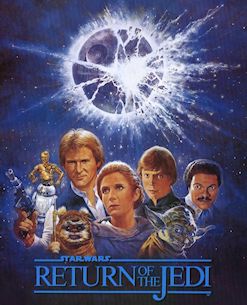
Episode VI Return Of The Jedi (1983)
 (135 min)

iReview: Version: Star Wars: The Complete Saga (Blu-ray);
Video: AVC 1080p; Audio: DTS 5.1.
Genre:: Action | Adventure | Epic | Fantasy | Science Fiction |
Sub-Genre/Type:: Action & Adventure | Ensemble Film |
Master Villain Film | Modern Classic | Sci-Fi Action |
Sci-Fi Adventure | Science Fiction Epic | Space Adventure |
Settings:: Out In Space.
Image
Mood?:: Adrenaline Rush |
Guy Movie | Other Dimensions.
iRate:: 4½ / 5
Director:: Richard Marquand.
Writers:: George Lucas (story); Lawrence Kasdan & George Lucas (screenplay).
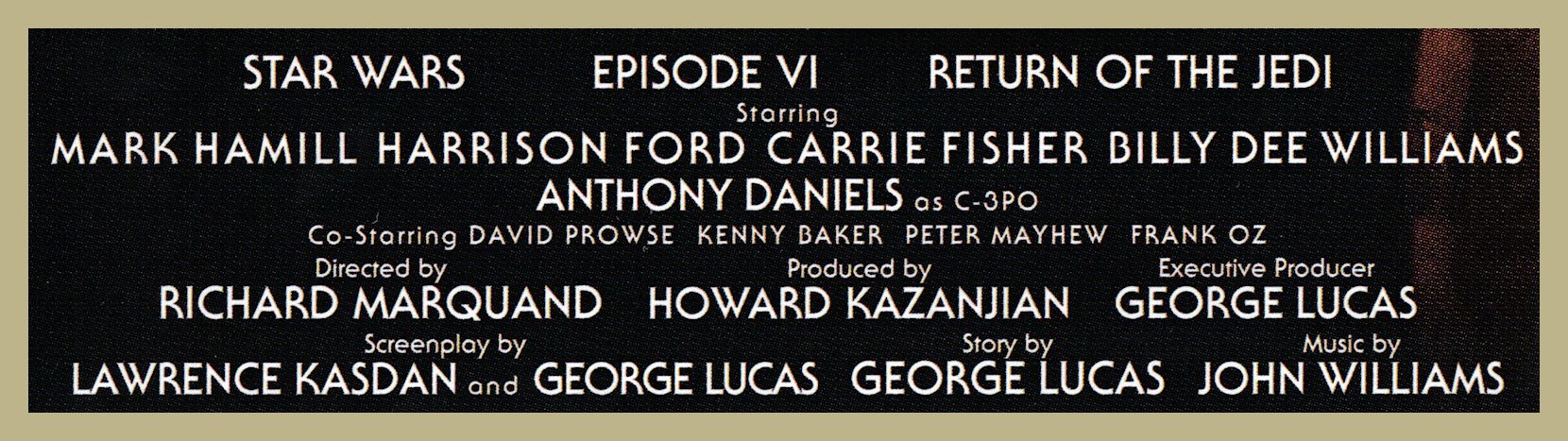
Cast:: Mark Hamill, Harrison Ford, Carrie Fisher, Frank Oz, Billy Dee Williams, Alec Guinness, Anthony Daniels, Kenny Baker, Peter Mayhew, David Prowse, James Earl Jones, Sebastian Shaw, Ian McDiarmid, Michael Pennington.

Click for Credits Enlargement
Credits (Click to expand)

Trailer (HD):

iReview:
This week’s selection was a no-brainer, as a happy coincidence of events made the choice very easy. Today is the 30th birthday of all-round-good-bloke and son in law, Morgan, who shares a birthday with the final chapter of one of his favourite film franchises, Star Wars: Episode VI – Return Of The Jedi. It’s hard to believe, I know, that it’s been that long. I had intended to set aside a whole weekend to view the entire Star Wars: The Complete Saga Blu-ray set, with its 6 movie and 3 Extras discs. But that’s going to have to wait. In the meantime, and in honour of Morgan’s birthday, I’m going to enjoy revisiting this much loved film.

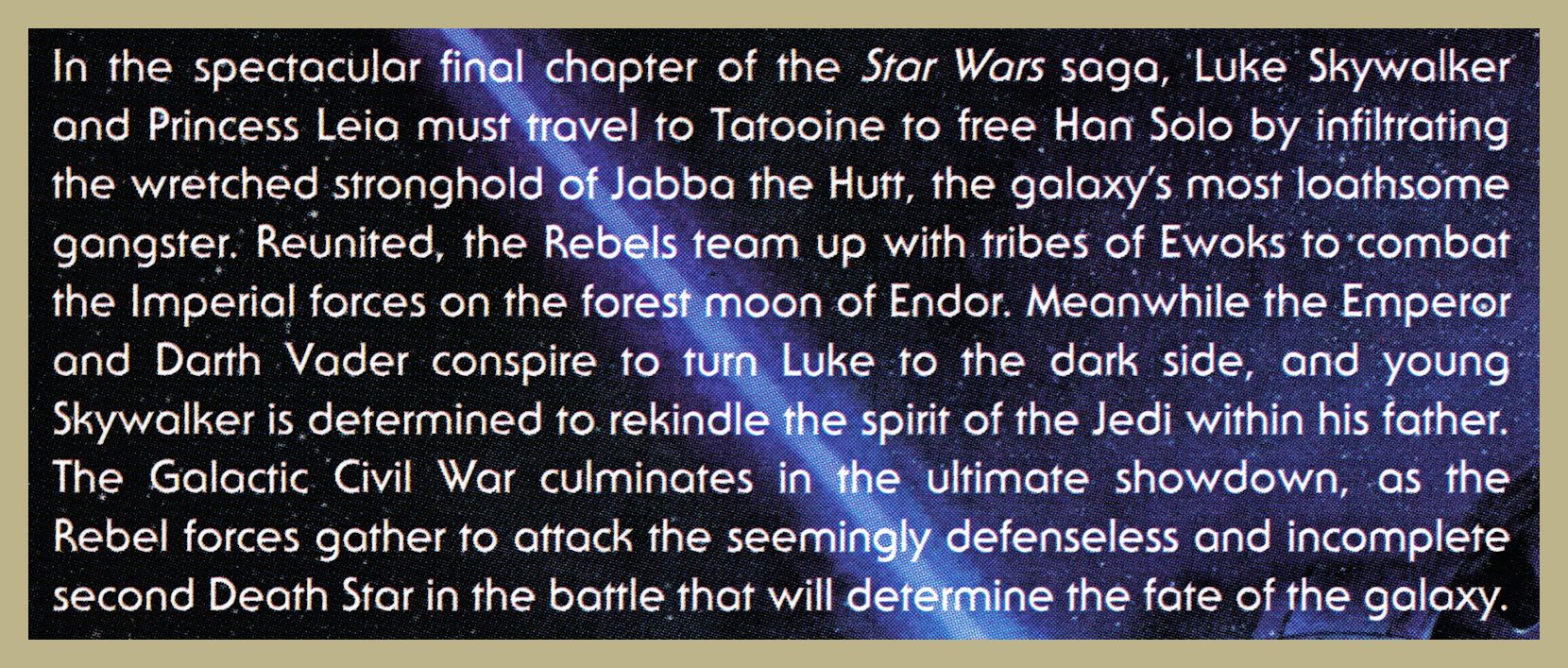
What Happens:
In the epic conclusion of the saga, the Empire prepares to crush the Rebellion with a more powerful Death Star.

Han Solo (Harrison Ford) emerges intact from the carbonite casing in which he’d been sealed, after rescue by R2-D2 (Kenny Baker), C-3PO (Anthony Daniels), Chewbacca (Peter Mayhew), Lando Calrissian (Billy Dee Williams), Princess Leia (Carrie Fisher), disguised as a bounty hunter, and Luke Skywalker (Mark Hamill). Then they must escape the clutches of the grotesque Jabba the Hutt.

On the forest moon Endor, the reunited team enlist the help of the Ewoks as the rebellion reaches its decisive stage.

Meanwhile, Luke Skywalker confronts Darth Vader (David Prowse & voiced by James Earl Jones) in a final climactic duel before the evil Emperor Palpatine (Ian McDiarmid). As he enters into this spirited battle with his light saber-wielding enemy, some surprising revelations await the young warrior…

Story
Story (Click to expand)

With the plot safely secured back in my memory, I sat down with a little unease; this was the first time I’d watched Jedi in isolation and also in glorious 1080p HD. How would the movie stand up without its usual crutches, Star Wars and The Empire Strikes Back to lend it support? I wanted it to be great, and you know what, I wasn’t disappointed.

In my memory, Jedi was the least impressive of the original trilogy. That may still be true but I get the feeling that by its release in 1983, we’d become very familiar with the Star Wars universe. I still remember the goose bumps I felt on that day in 1977, when I first saw the mighty Imperial Stardestroyer emerge from above and gradually fill the huge dark screen. The sequence was made perfect by the accompanying deep rumble of the sound track and John Williams’ opening of the Star Wars Symphony. When I first saw it, everything about Star Wars was new for me. I’d seen and been perplexed by 2001: A Space Odyssey (1968) but I’d never seen a space fable like Star Wars. The special effects were not a compromise of Flash Gordon model spacecraft darting drunkenly in front of an obviously painted matte space. They were believable and very real in a way I’d never seen before. I remember that very quickly, Star Wars had been integrated into my life to the extent that the sound-track vinyl album got frequent play even though it was completely out of place next to my Led Zeppelin, Deep Purple and Fleetwood Mac.

With the second installment, The Empire Strikes Back, in the hands of Irvin Kershner, the continuing story transcended the novel appeal of its predecessor and emerged as a cinematic triumph with a great story, great effects, and most importantly, none of Lucas’ dreadful dialogue. I recall seeing Jedi for the first time as a much anticipated closure to the story and with a very high bar set by the first two films, it didn’t disappoint.

The Picture:
In this high definition version of Jedi, the image is brilliantly saturated and crisply defined, with no discernible noise. I don’t remember Endor being quite as lush and beautiful as it appears here. As well, the battle between the Imperial and Rebel fleets fills the screen spectacularly and with a pitch-perfect DTS 5.1 audio track. The final confrontation between Vader and Luke also has all the drama and visual excitement I’d hoped for and remembered.

The Audio:
The Blu-ray DTS 5.1 sound track is stonkingly brilliant and that’s with no ifs, buts or maybes. The mix of sound effects and music score is pristine. The discretion of spacecraft rumble and other mechanical noises together with the subtlety and richness of the sounds of the Endorian natural environment, are a joy to hear. John Williams’ Star Wars theme has been waiting patiently for 30 years for the exposition of this Blu-ray set. And, never has Darth Vader’s respirator assisted voice sounded so menacing and the swoosh and hum of the lightsaber, so threatening.

Verdict:
My only criticism of this edition of Jedi, and it’s very minor; I wish someone had held Lucas back when he decided to tinker with the later releases of the film, including this one. Look out for the CGI soul singer with suitably silly alien backing group singing Jedi Rocks. I found myself mildly irritated that George thought the addition of this turgid song and its inconsequential CGI would somehow elevate the movie. Also, some of the other cosmetic CGI changes that Lucas has brought to the movie seem to stand out even more in HD, especially the not so successful additions of some obviously CGI building structures.

Coming back to the film in isolation, did also highlight how much merchandising Lucas was able to attach to these movies. I’d never been so conscious of how cute, kid friendly and stuffed toy-like the Ewoks were.

Overall though, this has been a wholly satisfying return to one of my favourite movie sagas and one I’m really looking forward to completing. I also have a sneaky feeling that once I’ve seen the rest of this Star Wars: The Complete Saga Blu-ray pack, the old DVD box-set (with the exception of the Special Features disc), might reluctantly have to migrate to Cash Converters.

Anyone looking to augment Morgan’s (if you know him, that is) Blu-ray collection can use these convenient links:
Star Wars: The Complete Saga Blu-ray (at eBay)
Star Wars: The Complete Saga Blu-ray (at JB HiFi)

iRate:: 4½ out of 5.

4Movie Tragics

Extras:
• Feature Commentary by Director George Lucas, actor Carrie Fisher, and crew, Ben Burtt and Dennis Muren (this is a surprisingly interesting and informative track, dominated, as you might expect, by George Lucas, which also appears on previous releases. If you’re new to this then I’d urge you to remember that Lucas is the creator and curator of the Star Wars mythology and so treat his recollections of fact with due caution.)
• Audio commentary from archival interviews with cast and crew.

You want More!
Star Wars: Return Of The Jedi – IMDb (Internet Movie Database)
Star Wars: Return Of The Jedi – Rotten Tomatoes
Star Wars: Return Of The Jedi – allmovie.com
Star Wars: Return Of The Jedi – Wikipedia


Where does “Return of the Jedi” fall on your list of favourite Star Wars flix? A lot of critics were unenthusiastic about this when it was released. Were they wrong? I love it, what about you?

:: Please leave a comment ::


The Sunday Screening Session….. How the West Was Won (1962)

17 Sunday Mar 2013

Posted by Zak de Courcy in Film

≈ 2 Comments

Tags

1839-1889, Adventure, American Civil War Era, Classic, Debbie Reynolds, Drama, Epic, Epic Western, Film, film review, Frontier Region, George Marshall, George Peppard, Gregory Peck, Henry Fonda, Henry Hathaway, History, History Fiction, How the West Was Won, iRate:: 4 / 5, James Stewart, John Ford, John Wayne, Karl Malden, Romance, Rural Setting, Slice Of History, Spencer Tracy, Sunday Screening Session, Tough Guys, USA, Western, Wild West Era

How the West Was Won (1962) (159 min)
iReview: Version: How the West Was Won: 2 Disc Edition (Blu-ray);
Video: VC-1 1080p; Audio: Dolby Digital (AC3) 5.1.
Genre:: Adventure | Drama | Epic | History | Romance | Western |
Sub-Genre/Type:: Classic | Epic Western | History Fiction |
Settings:: 1839-1889 | American Civil War Era | Frontier Region |
Rural Setting | USA | Wild West Era.
Image

Mood?:: Slice Of History | Tough Guys.
iRate:: 4 / 5
Directors:: John Ford
(segment “The Civil War”);
Henry Hathaway
(segments “The Rivers”, “The Plains”
and “The Outlaws”);
George Marshall
(segment “The Railroad”).
Writer:: James R. Webb (screenplay).
Cast:: Henry Fonda, Karl Malden, Gregory Peck, James Stewart, Debbie Reynolds, John Wayne (General William T. Sherman), Eli Wallach, Lee J. Cobb, Richard Widmark, George Peppard, Spencer Tracy (narrator), Harry Morgan (General Ulysses S. Grant), Carroll Baker, Carolyn Jones, Robert Preston, Walter Brennan, Andy Devine, Raymond Massey (President Abraham Lincoln), Agnes Moorehead, Thelma Ritter, Russ Tamblyn.

Click for Credits Enlargement
Credits (Click to expand)

Trailer:

(Note: The vertical bands that appear in this theatrical release trailer, have been digitally removed in the Blu-ray release of the film)

iReview:
In this week’s Sunday Screening, I’ve gone back 51 years to 1962 to seek out films in my library worthy of another look. 1962 was awash with more than 2,000 films released but after a quick scan, I was humbled by my few representatives from that year. But, my small sample does include some notable films: Dr. No, the first Bond film; To Kill a Mockingbird, with Gregory Peck’s outstanding portrayal as Atticus Finch, the lawyer who defends a black man against an undeserved rape charge; Lawrence of Arabia, the story of T.E. Lawrence’s desert war (my favourite film); Lolita, a story of forbidden infatuation by my favourite director, Stanley Kubrick; The Longest Day, the story of D-Day (6th June 1944); The Manchurian Candidate, with a brilliant Frank Sinatra as a brainwashed former captive of North Korea; Mutiny on the Bounty, starring Marlon Brando in an overwrought remake of the 1935 classic; and How the West Was Won. It’s the Blu-ray version of the last of these that I’ve selected for this week’s screening. I’ll be having another look at the rest of this eclectic bunch of 1962 films soon.

How the West Was Won is a curiosity in that it was one of only two narrative films produced using the Cinerama three lens camera system; the other being The Wonderful World of the Brothers Grimm (1962). And, given the complexity of filming in this format and the cost of building theatres capable of screening them, it’s not surprising. Cinerama required three projectors for the three screens used in the curved ultra widescreen presentation. Where the three projected images overlapped, there were thin blurred join-lines, but given the impact of the overall experience as projected onto the unique and enormous screen construction, this was a small infraction. As well as the stunning surround visuals, the system was also one of the first to employ 5.1 audio, giving an unparalleled audio-visual experience.

Story
Story (Click to expand)

For this epic western, three legendary directors, Henry Hathaway, John Ford, and George Marshall, were employed to shoot different segments of the stories of three generations of the Prescott family and their travels from east to west across America between 1839 and 1889. The film chronicles the family’s triumphs and tragedies as they encounter river pirates, suffer drownings and make and lose a fortune in California after travelling the plains together in a wagon train.

This all-star ensemble includes Karl Malden as pioneer Zebulon Prescott who sets out west with his wife (Agnes Moorehead) and their children, Lilith (Debbie Reynolds) and Eve (Carroll Baker). They travel down river and along the way, encounter mountain man and fur trader, Linus Rawlings (James Stewart), who marries Eve.

Lilith continues west after joining a wagon train led by Roger Morgan (Robert Preston), and is accompanied by roguish gambler Cleve Van Valen (Gregory Peck), who saves her during an Indian attack.

These first two vivid segments, dubbed ‘The Rivers (1840)’ and ‘The Plains (1850s)’, were directed by Henry Hathaway.

Moving into the 1860s, the Civil War erupts and Linus and Eve’s son, Zeb (George Peppard), enthusiastically follows his father into the Union army. However, after the Battle of Shiloh, he becomes disillusioned and contemplates a different path. This ‘Civil War (1861-1865)’ segment was directed by John Ford

Richard Widmark also stars as railroad boss Mike King, building the transcontinental railroad, who wants to cut a line straight through Indian territory but is resisted by mountain man, Jethro (Henry Fonda). Zeb, who has rejoined the army as a lieutenant in the U.S. cavalry, is tasked to secure a peace treaty with the Arapaho to allow the railroad construction to proceed peacefully. This segment, titled ‘The Railroad (1868)’, was directed by George Marshall and includes his famous buffalo stampede sequence.

In the final segment, The Outlaws (1880s), directed by Henry Hathaway, Lilith who made it as far west as California, has done well for herself in San Francisco but, after a change in circumstances, auctions most of her possessions and relocates to her ranch in Arizona, inviting Zeb to join her. However, Zeb, now a marshal, has a run-in with an old foe, Charlie Gant (Eli Wallach).

Many more characters and stories are woven throughout this epic film which also features appearances from Raymond Massey as President Abraham Lincoln, John Wayne as General William T. Sherman, and Harry Morgan as General Ulysses S. Grant.

In my earlier description of the plot, I’ve tried to limit the spoilers, so I don’t give everything away. I hope I haven’t just made the story completely obtuse in the process.

As a dramatic narrative, How the West Was Won works more like a travelogue, with emblematic scenic locations providing a visual feast, interrupted by action and dramatic set pieces. The characters are not on screen long enough to develop their identities but that is often a drawback of films that seek to cover an epic story over such a daunting time-span. And with so much visual splendour on offer, it’s only a minor criticism.

The technical restrictions of shooting with three fixed 27mm lenses meant that depth of field variations and close-ups, employed on traditional single lens films were not possible. One of the inadvertent benefits of this constriction is a vivid screen image with the incredible clarity of waving blades of prairie grass in the foreground against crisply defined mountain peaks in the distance. The fact that everything in shot is always in focus, also means that the entire image, including background action is invariably in motion, adding to the window-on-the-world quality of this film. As breath-taking as the magnificent vistas are, the shortcomings of the format are evident. The 400kg Cinerama camera was entirely mechanically rooted and most of the action is front-on because shots needed to be framed in such a way as to avoid foreground actors moving quickly across the boundary between one lens-view and another. These limitations, though, forced directors to become creative in the way shots were constructed and so, there are many wonderful and inventive tracking shots as the camera gracefully glided along its tracks.

When How the West Was Won was first released on VHS and DVD, the presentation was marred by the butchery required to crop the frame for display on the old 4:3 TVs. This compromise also negated one of the film’s main viewing attraction, its wonderful cinematography, rendering the movie barely watchable. Thankfully, for the three disc Special Edition DVD and Blu-ray releases, the film has been painstakingly restored with almost all evidence of the vertical three-panel join lines, digitally eliminated. The stunning result is an image that is brilliantly saturated and a joy to watch. The restoration has also left just enough occasional evidence of the vertical panel lines to demonstrate the ingenuity of the directors in utilising aspects of sets, like doorways, poles and building uprights as well as natural features like trees, to obscure the boundary lines.

For me, the work of John Ford, who filmed the short ‘Civil War (1861-1865)’ segment, is the most evocative and beautifully constructed. In its three scenes, there is the battlefield at Shiloh which ebbs into night with wonderfully lit horizon shots that stretch over and brilliantly amplify the ultra widescreen image. The shots beautifully juxtapose a war scene with the liberal ornamentation of Cherry blossoms, giving the night the look of Christmas decoration. The battle’s aftermath also reveals the short but effective scene with two disheveled Generals, Ulysses S. Grant and William Tecumseh Sherman. The quiet rhythm of the scene moves into the next, when Zeb returns home. The pacing and atmosphere of these scenes is exquisite.

Dave Kehr of the New York Times, in his 2008 review, wrote: “The best reason for buying a Blu-ray player right now is Warner Home Video’s high-definition version of “How the West Was Won,” a film made 46 years ago in the highest-definition moving picture medium the world had seen: Cinerama”. He continued, “Not even the finest home theater installation will be able to reproduce the scale and resolution of the Cinerama experience, or anything close to it. But moving from standard-definition DVD to Blu-ray generates a shock analogous to what the audiences of 1962 must have felt when the curtains parted to reveal the panoramic screen.”

Films like How the West Was Won and Ford’s other western masterpiece, The Searchers (1956), have languished in VHS hell for too long, waiting for the advent of Blu-ray and a big wide home screen on which to showcase their brilliance. This result is a riveting revelation and richly recommended.

iRate:: 4 out of 5.

4Movie Tragics

Extras:
• Feature Commentary by: Filmmaker David Strohmaier; Director of Cinerama, Inc. John Sittig; Film Historian Rudy Behlmer; Music Historian Jon Burlingame; and Stuntman Loren James (This informative and interesting track appears on both the Blu-ray and Special Edition 3-disc DVD versions).
• Cinerama Adventure (This fascinating 93 minute documentary tells you everything you didn’t know you needed to know about the revolutionary Cinerama format and appears on both the Blu-ray and Special Edition 3-disc DVD versions).
• The 2-disc Blu-ray version also offers a Smilebox version of the film, which attempts to mimic the curved screen of the original Cinerama process. The effect is hard to describe so you’ll need to get it to see it.

You want More!
How the West Was Won – IMDb (Internet Movie Database)
How the West Was Won – Rotten Tomatoes
How the West Was Won – allmovie.com
How the West Was Won – Wikipedia


I’d love to hear your impressions of this film. Am I wrong to rate it so highly despite its shallow plot and dialogue? I’d also welcome your impressions and anecdotes, if you’ve been one of the lucky few to have seen this at a Cinerama cinema.

:: Please leave a comment ::


Subscribe

  • Entries (RSS)
  • Comments (RSS)

Archives

  • March 2022
  • May 2019
  • January 2019
  • January 2017
  • June 2016
  • March 2016
  • September 2015
  • January 2015
  • October 2014
  • August 2013
  • June 2013
  • May 2013
  • April 2013
  • March 2013

Categories

  • Australian Politics
    • Aus Pol. Posts Index
  • Film
    • Film Posts Index (All)
    • Reviews Index (Alpha)
  • Gotta Life
    • Gotta Life Posts Index
  • International Politics
    • Int Pol. Posts Index
  • Religion
    • Religion Posts Index
  • Science
    • Science Posts Index
  • Uncategorized
  • WA Politics
    • WA Pol. Posts Index

Meta

  • Create account
  • Log in

Blog at WordPress.com.

Privacy & Cookies: This site uses cookies. By continuing to use this website, you agree to their use.
To find out more, including how to control cookies, see here: Cookie Policy
  • Subscribe Subscribed
    • Zak From Downunder
    • Already have a WordPress.com account? Log in now.
    • Zak From Downunder
    • Subscribe Subscribed
    • Sign up
    • Log in
    • Report this content
    • View site in Reader
    • Manage subscriptions
    • Collapse this bar
 

Loading Comments...